

The most recent and authoritative source, the Election Commission of Pakistan (ECP), reports that there are currently 175 officially registered political parties in Pakistan as of 2025. This number reflects the extensive multi-party democracy in the country, including both large mainstream parties and smaller regional or interest-based parties. Prominent parties among them include Pakistan Tehreek-e-Insaf (PTI), Pakistan Muslim League-Nawaz (PML-N), Pakistan Peoples Party (PPP), and others like the Istehkam-e-Pakistan Party (IPP) and Balochistan Awami Party, each with substantial political influence and leadership.
This number signifies the dynamic and pluralistic political landscape of Pakistan, highlighting both diversity and the complexities involved in its electoral and governance processes. I will now proceed to expand this information into a detailed, SEO-optimized, and engaging blog post tailored for readers interested in Pakistan’s political parties and politics in general.# How Many Political Parties Are There in Pakistan? A Comprehensive Guide
Pakistan is a vibrant multi-party democracy with a rich and complex political landscape. If you’ve ever wondered how many political parties exist in Pakistan and what role they play, this blog post will walk through everything you need to know. From the latest official numbers to key parties shaping the nation’s politics, this comprehensive guide is tailored for readers searching for clear, trustworthy, and engaging insight into Pakistan’s political parties in 2025.
Introduction
Imagine a country with over a hundred distinct political voices, each competing to shape governance, policies, and the future direction of the nation. That’s Pakistan—a country where democracy thrives through a broad spectrum of political parties, ranging from well-established major players to smaller, regional forces. In 2025, Pakistan’s political tapestry is more colorful and intricate than ever, reflecting diverse societal interests and vibrant political discourse.
In this post, we’ll explore the total number of political parties registered in Pakistan, introduce the major players and their leadership, outline the significance of this multi-party system, and provide useful context for anyone interested in Pakistani politics. Whether you’re a student, political enthusiast, online searcher, or a curious global citizen, this detailed exploration will offer you trusted knowledge and an engaging narrative.
How Many Political Parties Are There in Pakistan in 2025?
According to the latest data from Pakistan’s authoritative Election Commission (ECP), Pakistan currently has 175 officially registered political parties as of September 2025. This list is periodically updated and includes a wide array of political organizations representing diverse regional, ideological, and ethnic groups.
This figure underscores Pakistan’s pluralistic and competitive political system, where democracy is driven by multiple voices and interests. From national parties with extensive influence across provinces to smaller regional parties focusing on specific provinces or ethnic groups, the political party ecosystem in Pakistan is vast.
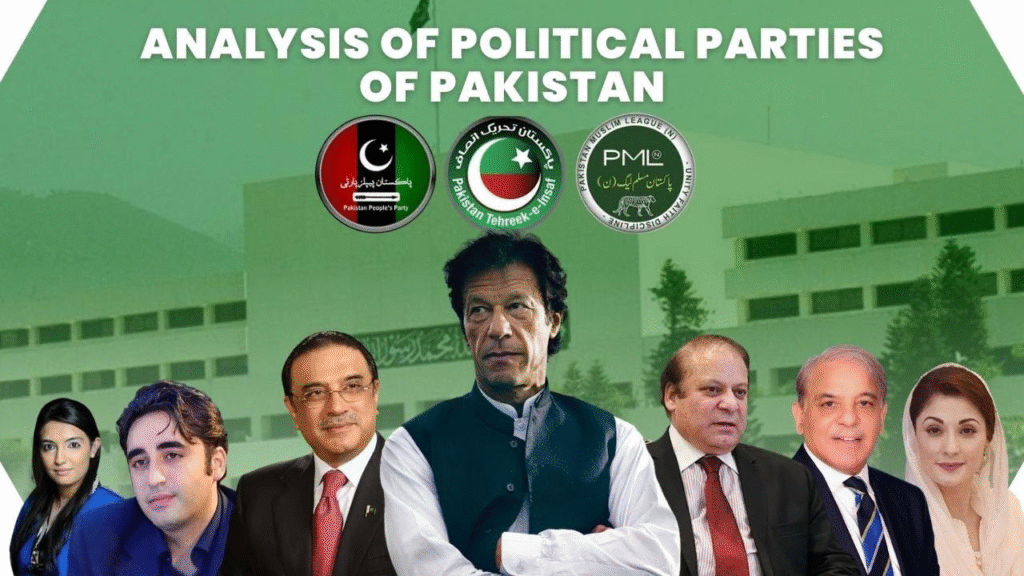
Why Are There So Many Parties?
The large number of parties reflects Pakistan’s socio-political diversity, constitutional freedoms, and the strategic nature of electoral politics:
- Ethnic and Regional Representation: Many parties are based around ethnic identities or provincial interests, such as the Balochistan National Party and Awami National Party.
- Religious and Ideological Lines: Some parties advocate specific religious perspectives or ideological standpoints, like Jamaat-e-Islami and Jamiat Ulema Islam.
- Political Fragmentation and Dynamics: Shifts in alliances, splits, and emergence of new factions contribute to the increasing count of parties.
- Democratic Rights: The political environment allows freedom of association, enabling various groups to form political parties.
Top Political Parties of Pakistan
While Pakistan boasts 175 political parties, a handful dominate the national political arena. Here’s a quick overview of the major players:
| Party Name | Leader | Key Features |
| Pakistan Tehreek-e-Insaf (PTI) | Former Chairman Pervez Khattak (registered leader) | Populist appeal, reforms focus, led by Imran Khan until 2023 |
| Pakistan Muslim League-Nawaz (PML-N) | Shehbaz Sharif | Traditional center-right, strong Punjab base |
| Pakistan Peoples Party (PPP) | Bilawal Bhutto Zardari | Center-left, strong Sindh base, legacy of Bhutto family |
| Istehkam-e-Pakistan Party (IPP) | President Abdul Aleem Khan | Newer party focused on stability and governance reforms |
| Balochistan Awami Party (BAP) | President Abdul Quddus Bizenjo | Regional party with stronghold in Balochistan |
| Awami National Party (ANP) | Asfandyar Wali Khan | Pashtun nationalism, left-leaning |
| Jamiat Ulema Islam (F) | Maulana Fazlur Rehman | Religious conservative party, strong in Khyber Pakhtunkhwa |
These parties, among a few others, significantly influence the national discourse, policy-making, and election outcomes. Their leaders are well-known figures in Pakistan’s political scene, often steering coalitions or opposition blocs.
Political Parties and Their Role in Pakistan’s Democracy
Having numerous parties enriches Pakistan’s democracy by promoting competition and offering citizens diverse choices. However, it also brings challenges, such as coalition politics, ideological fragmentation, and issues with governance stability.
Coalition Governments
Due to the multiple-party framework, Pakistan has often witnessed coalition governments. No single party usually commands an outright majority, necessitating alliances. These coalitions demand negotiation skills and political compromise, affecting governance efficiency.
Political Competition and Representation
The presence of many parties ensures that different social, ethnic, and regional groups find representation. This multiplicity helps address varied local issues and reflect Pakistan’s demographic complexity.
Electoral Impact
Elections in Pakistan are competitive with campaigns showcasing a range of political manifestos. The plethora of political parties means voters must navigate through diverse options, often aligning with parties based on ideological, ethnic, or developmental preferences.
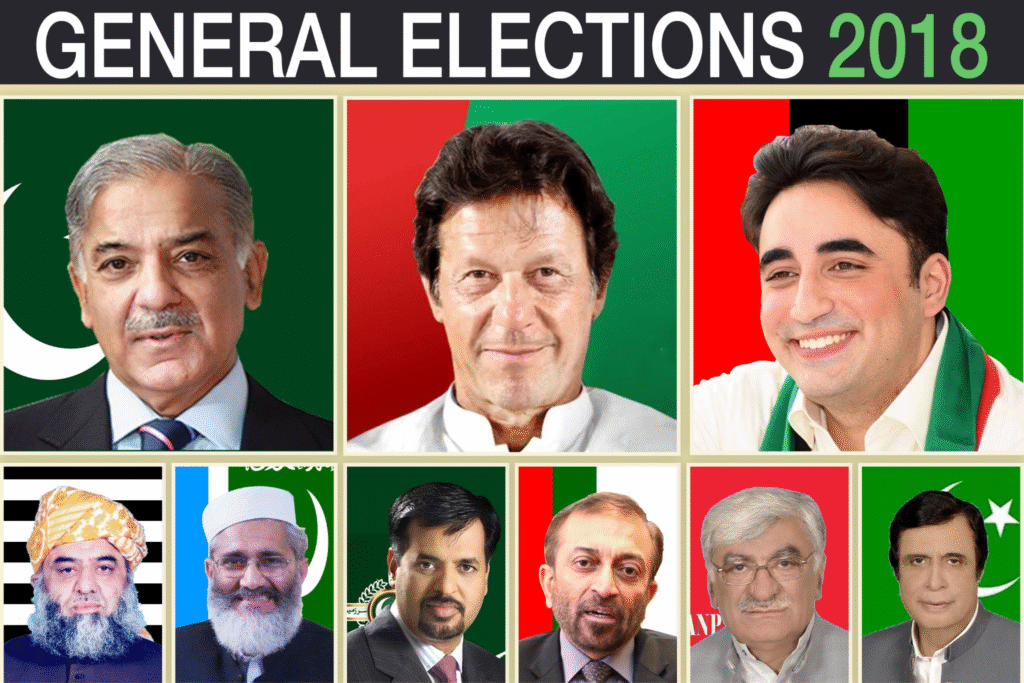
Understanding Pakistan’s Democracy Through Political Parties
Pakistan’s political party system is a mirror reflecting its democratic evolution and socio-political challenges. Despite facing issues like political instability and governance challenges, the multiplicity of parties testifies to a vibrant political culture where democratic participation remains alive.
Historical Context
Pakistan’s multi-party politics date back to its formation. Over the years, parties have splintered, merged, and reformed, responding to shifts in public sentiment and political environments. Military interventions and political crises have also impacted party dynamics but never fully stifled democratic competition.
Current Dynamics and Trends
In recent years, new parties like the Istehkam-e-Pakistan Party have emerged, signaling shifts in political allegiances and voter priorities. Meanwhile, historical parties retain loyal bases but face pressures to evolve in the face of new issues like youth unemployment, economic reforms, and governance transparency.
Additional Resources for Politics Enthusiasts
- For the latest and detailed list of registered political parties, visit the official Election Commission of Pakistan website.
- Follow major political news portals for current developments in electoral politics and party activities.
- Explore analyses from political scientists and local experts to understand deeper nuances.
The Evolution of Pakistan’s Political Party System
Pakistan’s journey as a multi-party democracy has been a complex and vibrant one, shaped by its socio-political dynamics, military interventions, and struggles for democratic governance. Since independence in 1947, the political party system in Pakistan has experienced significant shifts.
Early Years and Military Influence
In the initial decades after independence, Pakistan’s political environment was dominated by a few major parties, but frequent military coups interrupted civilian democratic rule. The military establishment exerted considerable influence over political affairs, sometimes sidelining civilian parties.
Transition to a Two-Party System
From the 1980s to the early 2000s, Pakistan’s party politics largely revolved around two major parties: the Pakistan Peoples Party (PPP) and the Pakistan Muslim League (PML). The PPP, founded in 1967 by Zulfikar Ali Bhutto, emerged as a left-leaning party advocating socialism and democracy. It played a key role in challenging military rule during the 1970s. The PML, notably under Nawaz Sharif, adopted a center-right conservative stance with a focus on economic liberalization.
During this time, the political system experienced cycles of military rule interspersed with civilian governments led by these two parties. Despite challenges, the PPP and PML became the pillars of Pakistan’s political architecture.
Emergence of a Three-Party System
A landmark change occurred in the 2010s with the rise of Pakistan Tehreek-e-Insaf (PTI), founded by Imran Khan in 1996. By the 2013 and 2018 general elections, PTI grew from a minor player to forming the government, thus breaking the decades-old two-party dominance. This transition expanded Pakistan’s party system into a three-party configuration, reflecting changing voter preferences and new political narratives emphasizing anti-corruption and reforms.
Recent Political Developments
Since 2020, Pakistan’s political landscape has become even more fluid. Alliances like the Pakistan Democratic Movement (PDM) party coalition emerged, challenging PTI’s government. New parties including the Istehkam-e-Pakistan Party (IPP) have also been formed to address contemporary political and governance issues.
The 2024 elections and subsequent political shifts have further diversified the party system, demonstrating Pakistan’s evolving democratic maturity amid ongoing challenges.
Major Political Parties: Historical and Current Perspectives
Pakistan Peoples Party (PPP)
The PPP remains one of the oldest and most influential political parties in Pakistan. Founded by Zulfikar Ali Bhutto in 1967, it carved its political identity through socialist policies and opposition to military dictatorships. The party suffered heavy blows during General Zia-ul-Haq’s dictatorship but rebounded under Benazir Bhutto’s leadership. Despite some internal factionalism and challenges, the PPP continues to have a stronghold in Sindh province and plays a critical role in national politics.
Pakistan Muslim League-Nawaz (PML-N)
PML-N emerged from the Punjab-based Muslim League faction and has been a major political force since the 1990s. Its leadership under Nawaz Sharif and later Shehbaz Sharif focused on economic development, infrastructure, and conservative policies. PML-N and PPP have historically been rivals but have also collaborated against newer political challengers like PTI.
Pakistan Tehreek-e-Insaf (PTI)
PTI’s rise marked a significant political shift, positioning itself around anti-corruption, populism, and youth engagement. Imran Khan’s leadership mobilized a new generation of voters, challenging the established political order and forming Pakistan’s government from 2018 onward. PTI’s tenure has been marked by efforts toward governance reforms but also political unrest and challenges from rival parties.
Regional and Smaller Parties
In addition to the major national parties, regional parties such as the Balochistan Awami Party (BAP) and Awami National Party (ANP) represent ethnic and provincial interests. Religious parties like Jamaat-e-Islami and Jamiat Ulema Islam continue to influence the political discourse, especially in certain constituencies.
The Role of Political Parties in Strengthening Democracy
Political parties in Pakistan are crucial for democratic representation, providing platforms for citizens to participate in governance and policy-making. Despite facing obstacles like political instability and governance issues, the multiplicity of parties enriches debate and ensures diverse voices are heard.
Conclusion
Pakistan is home to 175 officially registered political parties as of 2025, reflecting an expansive, diverse, and dynamic political ecosystem. This multitude of parties brings both vibrancy and complexity to Pakistan’s democratic system, where broad representation coexists with coalition politics and evolving political landscapes.
If interested in Pakistan’s politics, understanding these parties—their histories, leaders, and roles—provides crucial insight into how this nation’s democracy functions. Stay engaged, explore further, and participate in this evolving political dialogue.
FAQs:
How many political parties are currently registered in Pakistan?
As of 2025, Pakistan has 175 officially registered political parties according to the Election Commission of Pakistan. These include major national parties, regional parties, and smaller ideological groups, reflecting the country’s diverse political landscape
Which are the major political parties in Pakistan?
The major political parties in Pakistan include Pakistan Tehreek-e-Insaf (PTI), Pakistan Muslim League-Nawaz (PML-N), Pakistan Peoples Party (PPP), Istehkam-e-Pakistan Party (IPP), Balochistan Awami Party (BAP), and Awami National Party (ANP). These parties have significant influence across different provinces and are key players in federal and provincial politics.
Why does Pakistan have so many political parties?
Pakistan’s large number of political parties is due to its ethnic, regional, and ideological diversity. The multi-party setup allows representation of various groups’ interests, including regional nationalism, religious perspectives, and socio-economic priorities. The democratic system’s openness to political association also encourages the formation of new parties.
How do political parties in Pakistan affect governance?
Political parties in Pakistan shape governance through their participation in elections, forming coalition governments, and influencing policy-making. The multi-party system often results in coalition governments, requiring negotiation and compromise, which can both enrich democratic practice and pose challenges to political stability
How can a new political party get registered in Pakistan?
To register a new political party in Pakistan, the group must comply with Electoral Commission regulations, including having at least 2,000 members, paying registration fees, and meeting legal and organizational criteria as set by the Election Commission of Pakistan. Registration allows the party to contest elections and receive legal recognition.