
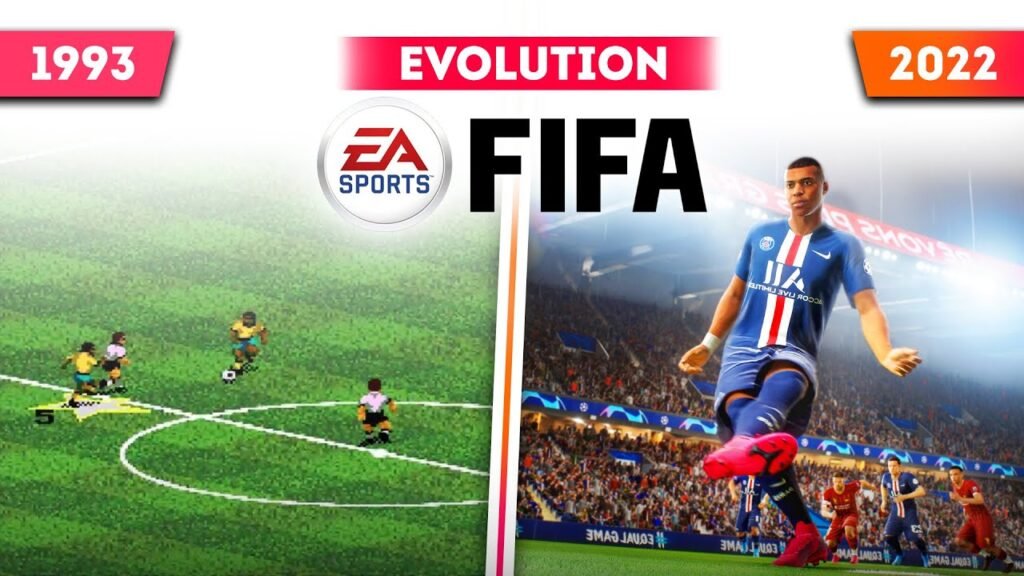
Remember the satisfying crunch of the “power shot” in FIFA 98, or the pixelated but exhilarating dribbles of Ronaldinho in FIFA 2004? For many of us, the FIFA franchise isn’t just a video game; it’s a rite of passage, a digital chronicle of our love affair with football. From its humble beginnings on 16-bit consoles to the photorealistic, hyper-connected experience of today, the FIFA series has mirrored the sport it emulates, evolving with the times while staying true to its core. This isn’t just a story about a game; it’s a nostalgic journey for those who’ve grown up with it, and a fascinating look for those curious about its impact. So, lace up your virtual boots, and let’s take a deep dive into the evolution of FIFA Football.
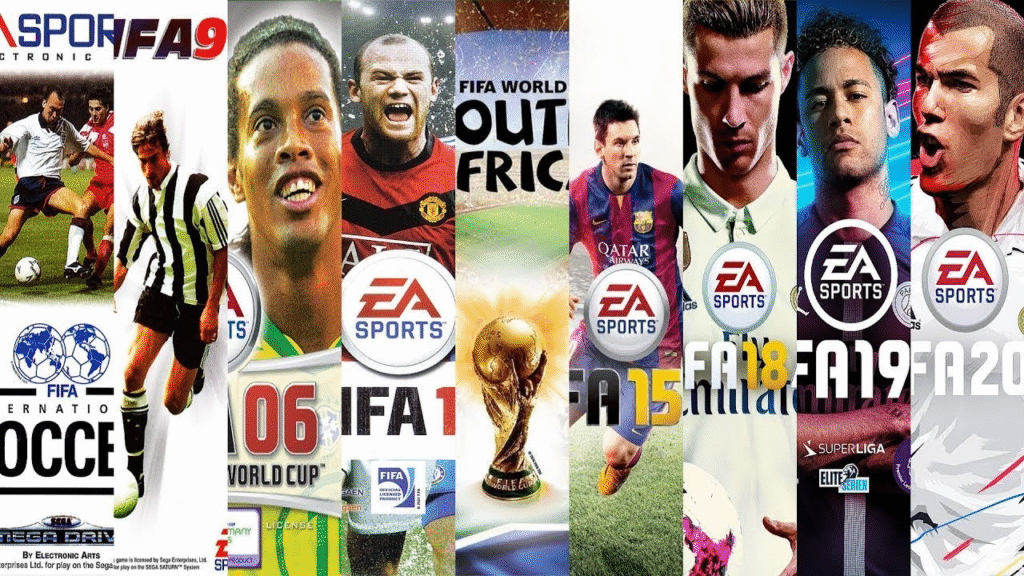
The Dawn of a Dynasty: The Early Years (1990s)
Before FIFA became a household name, the virtual football landscape was a wild west of sorts. Games like Sensible Soccer and Kick Off dominated, but they lacked the official licenses that would become FIFA’s defining feature. FIFA’s arrival in 1993 with FIFA International Soccer changed everything.
- The Big Bang of Licenses: The most significant leap was the official FIFA license. This meant real teams, real players, and real kits, which was a game-changer for authenticity. While the early player models were rudimentary (think square heads and blocky bodies), the ability to play with your favorite club was a major selling point.
- Arcade Fun and Fluidity: The gameplay of the early titles was more arcade-like. FIFA 95 and FIFA 96 introduced more fluid movement and improved physics, but the focus was on fast-paced, action-packed matches rather than deep tactical realism. The “sprinting” button, the famous “one-two” pass, and the satisfying thwack of the ball all contributed to a fun, pick-up-and-play experience.
- A New Era of Commentary: FIFA 96 was a landmark title for another reason: the introduction of real-time commentary. Hearing John Motson and Andy Gray’s voices brought an unparalleled level of immersion. This feature became a staple of the series, adding to the feeling that you were watching a real match unfold.
- The Road to Glory: The 1990s culminated with FIFA 98: Road to World Cup. This game is still considered a classic by many. It introduced a full World Cup tournament mode, complete with qualifying rounds, and famously featured the Blur song “Song 2.” The indoor football mode was another fan-favorite, showcasing a more chaotic and fast-paced style of play.
: The Millennium Shift: New Consoles, New Horizons (2000s)
As the new millennium dawned, so too did a new generation of consoles (PlayStation 2, Xbox, GameCube). The increased processing power allowed EA Sports to push the boundaries of realism, and the rivalry with Konami’s Pro Evolution Soccer (PES) series pushed both franchises to innovate.
- The Fight for Realism: The early 2000s saw a “realism race” between FIFA and PES. PES was lauded for its nuanced, tactical gameplay, while FIFA continued to build on its brand, licenses, and presentation. Titles like FIFA Football 2003 and FIFA 2004 saw improvements in ball physics, player animations, and the introduction of the “Freestyle Control” system, which gave players more control over their dribbling and skills.
- The Golden Age of Career Mode: The 2000s were a golden era for Career Mode. It evolved from a simple league structure into a deep management simulation. Players could now manage their team’s finances, scout for young talent, and negotiate player transfers. The satisfaction of taking a lower-league team to the top became an addictive and rewarding experience. The addition of manager objectives and the ability to train players further deepened the experience.
- The Rise of Online Play: With the advent of reliable internet connections and online gaming services, FIFA made its mark on the multiplayer scene. FIFA 2005 was one of the first titles to offer a robust online mode, allowing players to compete against friends and strangers from around the world. This laid the foundation for the massive online community that would become a cornerstone of the modern FIFA experience.
: The Modern Era: Hyper-Realism, Ultimate Team, and Esports (2010s & Beyond)
The 2010s marked the transition to the most advanced era of FIFA yet. This period is defined by a relentless pursuit of realism, the explosion of a new game mode, and the rise of competitive gaming.
- Frostbite Engine & Hyper-Realism: In 2016, FIFA 17 switched to the Frostbite engine, previously used for Battlefield. This was a monumental shift. The new engine allowed for unprecedented levels of graphical fidelity. Player models became more detailed, stadium lighting and crowd animations were more realistic, and the overall presentation felt more like a live broadcast. This also enabled the creation of “The Journey,” a story mode following a young footballer’s career, a feature that added a narrative element to the series.
- The Ultimate Revolution: FIFA Ultimate Team (FUT): Introduced in FIFA 09, Ultimate Team has grown from a simple card-based mode into a multi-billion dollar juggernaut. It allows players to build their dream squad by acquiring player cards through packs, challenges, and the transfer market. FUT’s constant cycle of new content, including special events and in-form cards, has created a highly engaged, and sometimes controversial, community. Its impact on the franchise’s revenue and player engagement is immeasurable.
| Game | Key Innovation | Impact |
| FIFA 93 | Official FIFA License | Authenticity, brand recognition |
| FIFA 96 | Real-time Commentary | Immersion, presentation |
| FIFA 98 | World Cup Tournament, Indoor Football | Added game modes, variety |
| FIFA 2004 | Freestyle Control | More player control, skill-based gameplay |
| FIFA 2009 | Ultimate Team | Massive revenue driver, community engagement |
| FIFA 17 | Frostbite Engine, The Journey | Hyper-realism, new story mode |
Export to Sheets
- The Rise of Esports: The modern FIFA landscape is heavily intertwined with competitive gaming. The FIFA Global Series, a professional esports circuit, brings together the world’s best players to compete for prize money and global recognition. This has elevated FIFA from a casual pastime to a legitimate professional sport, with players training and competing at an elite level.
- Gameplay Refinements: The modern gameplay, while sometimes criticized for its reliance on meta-strategies, has evolved to be highly technical. Features like the “Timed Finishing” mechanic, the dynamic “Active Touch System,” and sophisticated AI make for a deep and complex on-pitch experience. The game now simulates not just the players but also the tactical flow of a real football match.
: The Future of the Franchise: What’s Next for EA Sports FC?
In 2022, EA Sports announced that its long-standing partnership with FIFA would end. The franchise has been rebranded as EA Sports FC, with the first title, EA Sports FC 24, released in late 2023. While the name has changed, the essence of the game remains. EA Sports has retained its vast network of licenses, including the Premier League, La Liga, and many others.
The future of EA Sports FC seems to be a continuation of the modern formula, with a focus on:
- Continued Hyper-Realism: Expect further graphical enhancements, more realistic player movement (thanks to technologies like HyperMotion V), and an even more authentic broadcast feel.
- Expansion of Ultimate Team: The core of the game will likely remain FUT, with new features, card types, and events to keep players engaged.
- Cross-Play & Connectivity: With gaming becoming more interconnected, expect seamless cross-play across all major platforms, making it easier for friends to play together regardless of their console.
- The Evolution of Esports: The competitive scene will continue to grow, with more tournaments and opportunities for aspiring pros.
: The Golden Age of Career Mode: More than a Game
While Ultimate Team may dominate the headlines today, for a significant portion of the fanbase, the heart and soul of FIFA has always been Career Mode. The 2000s and early 2010s saw this mode evolve from a simple season-by-season progression into a deep, compelling, and often frustrating managerial experience.
- From Player to Manager: Early versions of Career Mode were linear. You picked a team, played the league, and maybe won a cup. But with the PS2/Xbox generation, EA introduced a much more robust system. You weren’t just a player; you were a manager, responsible for squad morale, finances, and the dreaded transfer window. The challenge of building a team from scratch, scouting a hidden gem in Brazil or Argentina, and nurturing them into a superstar felt incredibly rewarding.
- The Emotional Rollercoaster: Career Mode offered a unique, long-term narrative that a quick online match couldn’t replicate. The drama of a transfer deadline day, the elation of an unlikely promotion, or the despair of a last-minute cup final defeat created a bond between the player and their virtual club. It was about creating your own football history, making a legacy that went beyond a single season.
- Tactical Depth: Later iterations of Career Mode introduced more tactical control. You could now set specific instructions for players, create custom formations, and manage your team’s training schedule to improve their attributes. This shift from a simple arcade experience to a more nuanced football simulation was a direct response to the competition from PES, which was celebrated for its tactical depth. FIFA’s answer was to incorporate those elements while leveraging its superior licensing and presentation.
: The Great Rivalry: FIFA vs. Pro Evolution Soccer
No discussion of FIFA’s evolution is complete without acknowledging its greatest rival: Konami’s Pro Evolution Soccer (PES), now known as eFootball. For over a decade, the rivalry between the two franchises was the stuff of legend, a heated debate among fans that often mirrored real-life football rivalries.
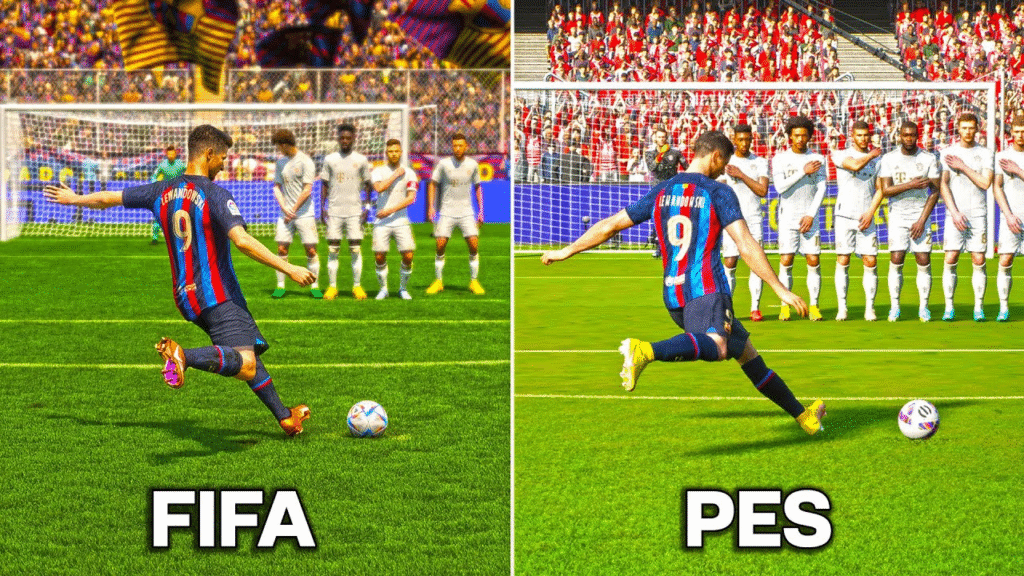
- The Gameplay vs. Licenses Debate: The core of the rivalry centered on a simple question: what makes a football game great? For most of the 2000s, PES was the choice for purists. Its gameplay was considered more realistic, with a slower pace, better ball physics, and a greater emphasis on tactical build-up play. In contrast, FIFA was seen as the more accessible, arcade-style option, but it had the trump card: official licenses. Playing as “Manchester United” in FIFA felt more authentic than “Man Red” in PES.
- FIFA’s Turning Point: The rivalry was at its fiercest in the mid-2000s. While PES had a loyal following, FIFA started to close the gameplay gap. FIFA 09 is widely seen as the turning point. It introduced a new collision engine and improved player control, making the on-field action feel more physical and realistic. This, combined with the launch of Ultimate Team, saw FIFA’s sales and player base begin to pull away from its competitor.
- The Modern Landscape: In the 2010s, FIFA’s dominance became undeniable. The introduction of the Frostbite engine, the global success of Ultimate Team, and the development of a robust esports scene solidified its position. While PES continued to release solid gameplay, its lack of licenses and the sheer momentum of the FIFA juggernaut made it difficult to compete. Today, eFootball has shifted to a free-to-play model, a clear sign of the changed landscape.
Conclusion: A Legacy Etched in Digital Pitch
From its simple 16-bit beginnings to the photorealistic spectacle of today, the FIFA franchise, now EA Sports FC, has been a constant presence in the lives of football fans worldwide. It has captured the thrill of the sport, evolved with technological advancements, and fostered a global community. While the name may have changed, the legacy remains: a game that has consistently delivered the beautiful game, one digital match at a time.
Whether you’ve been playing since the days of “Sensible Soccer” or you’re just starting your journey with “EA Sports FC 24,” the joy of scoring a last-minute winner, the frustration of a missed penalty, and the camaraderie of playing with friends remain timeless. The evolution of FIFA is a testament to the enduring appeal of football itself—a story of passion, competition, and constant innovation.
FAQs
Why did the FIFA franchise change its name to EA Sports FC?
The name change from FIFA to EA Sports FC was the result of a financial and creative disagreement between EA Sports and FIFA, the governing body of world football. Reports indicated that FIFA demanded a significantly higher license fee, in the range of a billion dollars over four years, for the use of its name. Additionally, EA sought greater creative freedom to expand the game beyond the traditional 11v11 match, and the new brand allows them to do so without the constraints of the FIFA license.
What is the main difference between FIFA and the new EA Sports FC titles?
Despite the name change, the core of the game remains largely the same. EA Sports FC titles have retained the vast majority of official licenses, including top leagues like the Premier League, La Liga, and the UEFA Champions League. The main difference is the absence of the official FIFA branding, such as the FIFA World Cup tournament mode. However, EA has secured new licenses, and the gameplay continues to evolve with the same engines and modes that fans are familiar with.
How did FIFA Ultimate Team (FUT) change the franchise?
FUT, introduced in FIFA 09, revolutionized the franchise by creating a collectible card game within the football simulation. It shifted the focus from a simple annual release to a year-round, live-service game mode. FUT’s success is due to its addictiveness and a constant stream of new content, including special player cards and in-game challenges. Its microtransaction model has also become a significant source of revenue for EA and a major point of discussion within the gaming community.
What were some of the most popular and impactful classic FIFA games?
Many long-time fans have a soft spot for classic titles that made a lasting impression. FIFA: Road to World Cup 98 is a fan favorite for its inclusion of the World Cup tournament with qualifying rounds, the iconic soundtrack by Blur, and the fun indoor football mode. FIFA 96 is remembered for introducing real-time commentary, a feature that became a staple of the series. More recently, FIFA 09 is considered a major turning point for the franchise, as its refined gameplay and the introduction of Ultimate Team laid the groundwork for the modern era of the series.
How has the core gameplay of FIFA evolved over time?
The gameplay has evolved from a simple, arcade-style experience to a complex, hyper-realistic simulation. Early games focused on basic passing and shooting, but the move to 3D graphics in the mid-90s allowed for more fluid movement and realistic physics. In the 2000s, the rivalry with PES pushed EA to focus on more tactical gameplay, introducing features like “Freestyle Control.” The modern era, powered by the Frostbite engine, has brought unprecedented graphical fidelity and advanced systems like “HyperMotion Technology,” which uses real-world player data to create highly realistic animations and movement.