
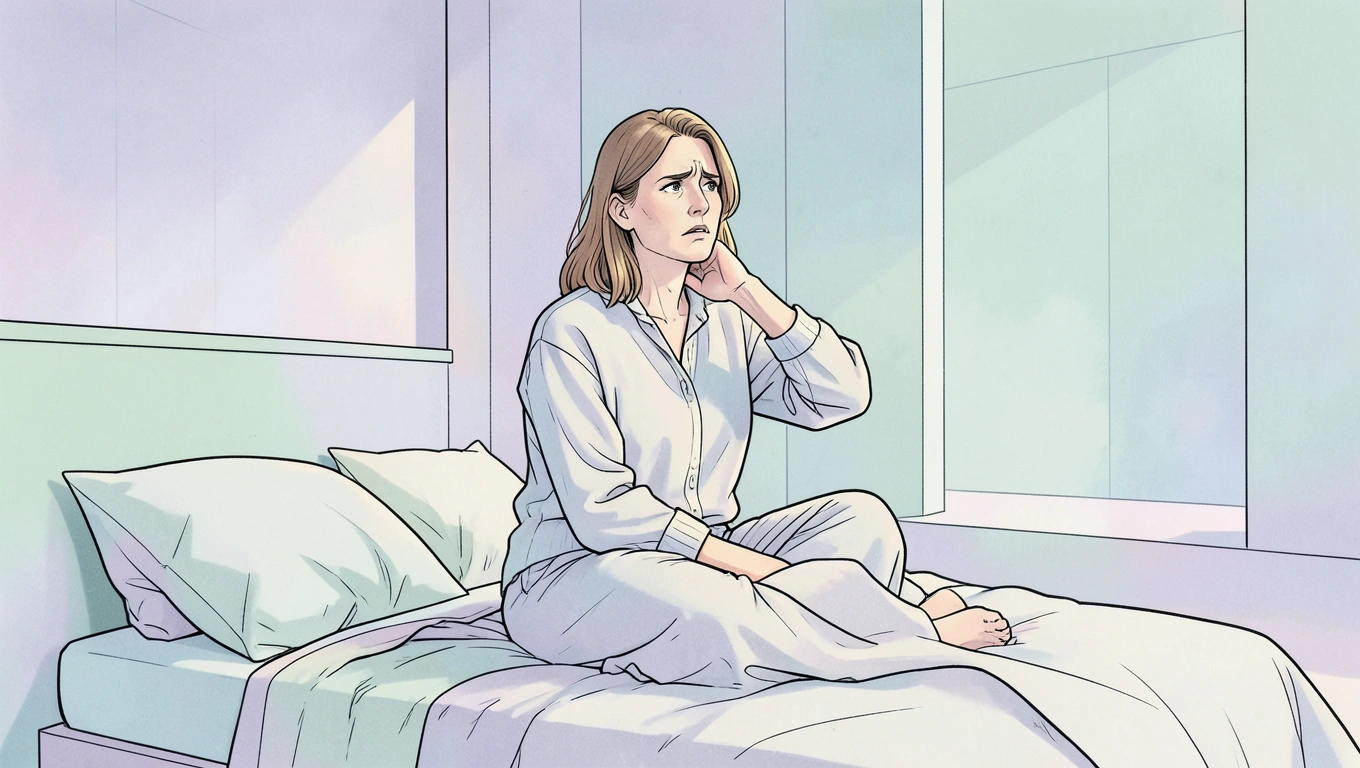
Waking up with a stiff neck can turn a peaceful morning into an uncomfortable start to your day. That tight, achy feeling when you try to look over your shoulder or tilt your head isn't just annoying - it's your body telling you something about how you slept. Most people experience this at some point, and the good news is that the cause is often something you can identify and fix yourself. Understanding what to check first can help you prevent those painful mornings and wake up feeling refreshed instead of restricted.
Your Sleep Position Is Likely the Culprit
The position you sleep in plays the biggest role in whether you wake up with neck pain. When you spend six to eight hours with your neck in an awkward position, the muscles, tendons, and ligaments get strained. They're essentially locked in a stretched or compressed state for the entire night, which leads to that stiff feeling when you finally move.
Stomach sleeping is particularly problematic for your neck. Think about it - when you lie face-down, you have to turn your head to one side just to breathe. Your neck stays rotated at nearly 90 degrees for hours. This prolonged rotation puts significant stress on the cervical spine and surrounding soft tissues. It's one of the hardest positions on your neck, even if it feels comfortable when you first drift off.

Side sleeping and back sleeping generally offer better support for your neck alignment. When you sleep on your back, your head, neck, and spine can maintain a more neutral position. Side sleeping works well too, as long as your pillow fills the space between your ear and shoulder properly. If you're a dedicated stomach sleeper, try transitioning gradually by using pillows to prop yourself into a side position until it becomes habit.
Check Your Pillow Support Next
Even if you sleep in a good position, the wrong pillow can undo all those benefits. Your pillow's job is to keep your head aligned with your spine - not too high, not too low, and with enough support to maintain the natural curve of your neck. When that alignment is off, you're setting yourself up for morning stiffness.
A pillow that's too high pushes your head forward and up, creating tension in the back of your neck. One that's too flat does the opposite, letting your head drop and straining the front and sides. Firmness matters too - a pillow that's too soft collapses under the weight of your head, while one that's overly firm doesn't contour to your neck's shape. Both scenarios leave your neck unsupported for hours.
Specialty pillows like the Original Groove Pain Relief Pillow are designed with an ergonomic shape to align your neck and spine, offering relief from neck pain and stiffness for both back and side sleepers. Similarly, Kanuda cervical pillows are engineered to support the natural curve of your neck and promote neutral spinal alignment, offering a personalized fit based on anatomy and support needs. The Osteo Cervical Pillow features a contoured, butterfly-shaped design for targeted neck support, aiming to promote neutral spinal alignment.
Before investing in a new pillow, assess what you currently have. Fold your pillow in half - if it doesn't spring back, it's lost its support and needs replacing. Pay attention to where your head sits when you lie down. Your nose should point straight up if you're on your back, or straight ahead if you're on your side, not angled up or down.
Don't Overlook Your Mattress and Daily Habits
Your mattress supports your entire body, and if it's sagging or too soft, your spine sinks out of alignment. This creates a chain reaction - when your torso and hips aren't properly supported, your neck has to compensate. A mattress that's too firm can create the opposite problem, especially for side sleepers, by not allowing your shoulders to sink in enough.
Most mattresses last about seven to ten years before they lose their supportive properties. If yours is older, has visible sagging, or you wake up feeling worse than when you went to bed, it might be time to replace it. A supportive mattress works together with a good pillow to keep your whole spine aligned.
What you do during the day matters too. Poor posture while working, stress-related muscle tension, and existing conditions like arthritis can all contribute to morning neck stiffness. If you spend hours hunched over a computer or phone, those muscles are already tight before you even lie down. Stress causes many people to unconsciously tense their neck and shoulder muscles, and that tension doesn't always release during sleep.
Take stock of your daily habits. Do you crane your neck forward to look at screens? Do you hold tension in your shoulders when you're stressed? Addressing these patterns can reduce the baseline tightness you bring to bed each night.
Simple Morning Checks and Stretches
When you wake up with a stiff neck, gentle movement helps more than staying immobile. Your muscles have been in one position for hours, and light stretching encourages blood flow and flexibility. Start slowly - don't force any movement that causes sharp pain.
Try tilting your head toward one shoulder, holding for 15-20 seconds, then repeating on the other side. Slowly rotate your neck to look over each shoulder. Roll your shoulders backward in circles to release upper back tension that often accompanies neck stiffness. These simple movements can ease minor stiffness within a few minutes.
Apply warmth to encourage muscle relaxation. A warm shower directed at your neck or a heating pad for 10-15 minutes can help loosen tight muscles. Some people find that alternating between warmth and cold works well, but start with heat if you're unsure.
If your stiffness is severe, comes with numbness or tingling in your arms, or doesn't improve with basic self-care, it's worth seeing a healthcare provider. These symptoms could indicate a pinched nerve or another condition that needs professional evaluation.
Summary
- Sleep position is the most common cause of morning neck stiffness, with stomach sleeping being particularly problematic due to prolonged neck rotation
- Your pillow should maintain neck alignment - not too high, low, soft, or firm - and should be replaced if it no longer springs back when folded
- A supportive mattress contributes to full spinal alignment, and most need replacement after seven to ten years
- Daily habits like poor posture and stress-related muscle tension can compound overnight neck strain
- Gentle stretches and warmth help ease minor morning stiffness by encouraging blood flow and muscle relaxation
- Severe stiffness, numbness, or tingling warrants professional medical evaluation
- Back and side sleeping positions generally offer better neck support than stomach sleeping
Final Thought
Morning neck stiffness usually isn't a mystery - it's feedback about your sleep setup and daily habits. The encouraging part is that most causes are within your control to change. Start with the basics: evaluate how you sleep, assess your pillow and mattress, and notice what tension you're carrying into bed each night. Small adjustments often make a significant difference.
You don't need to accept waking up in pain as normal or inevitable. Your body is adaptable, and with the right support during sleep, those muscles and ligaments can relax instead of strain. If simple changes don't help within a week or two, or if your symptoms are severe, consulting a healthcare provider ensures you're not missing an underlying issue. But for most people, better sleep posture and proper support are the keys to pain-free mornings. Pay attention to what your neck is telling you, make the adjustments it needs, and you'll likely notice the difference within just a few nights.
Questions?
Can stress really cause a stiff neck in the morning?
Yes, stress causes many people to unconsciously tense their neck and shoulder muscles throughout the day. This tension often persists during sleep, leaving muscles tight and prone to stiffness by morning. Managing daily stress through relaxation techniques can reduce this muscle tension before bed.
How long should it take for a stiff neck to improve?
Minor stiffness from sleeping awkwardly typically improves within a day or two with gentle stretching and proper support. If your neck stiffness persists beyond a week, worsens, or comes with other symptoms like numbness, consult a healthcare provider to rule out more serious conditions.
Is it better to use no pillow if my neck hurts?
Generally no - most people need some pillow support to maintain neck alignment with the spine. The exception might be stomach sleepers, who could benefit from a very thin pillow or none at all. For back and side sleepers, the right pillow height and firmness is better than going without one entirely.
Should I sleep with a neck brace if I wake up with pain?
Neck braces are typically only recommended for specific injuries or conditions diagnosed by a healthcare provider. For general morning stiffness, gentle movement and stretching are more beneficial than immobilization. Extended use of a brace without medical guidance can actually weaken neck muscles over time.