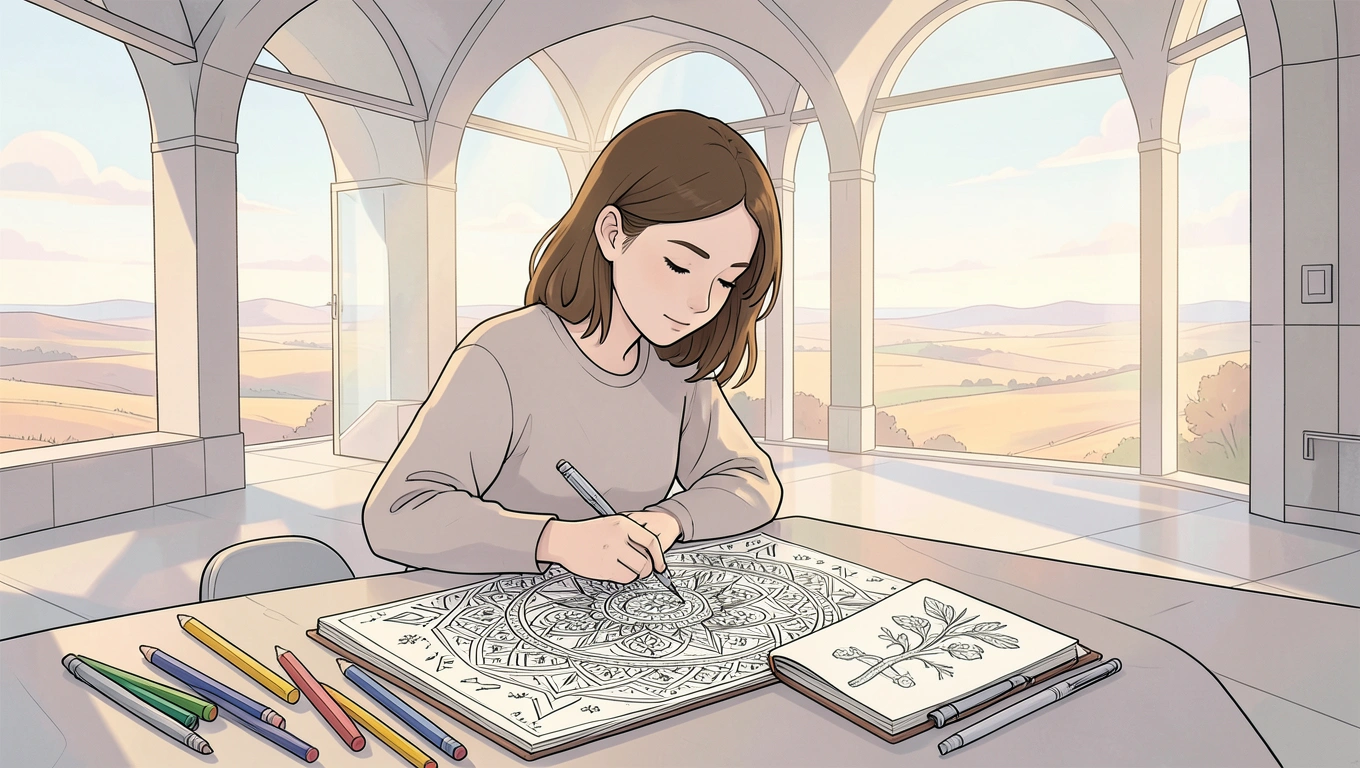
Something shifted in bookstores around 2015. Shelves once dominated by novels and business guides suddenly bloomed with intricate mandalas, zen gardens, and geometric patterns waiting for color. Adult coloring books weren't just a quirky fad - they exploded into a cultural phenomenon, with sales rocketing from roughly 1 million books in 2014 to an estimated 12 million the following year. But this wasn't just about coloring. Alongside it, sketching journals and drawing guides for adults gained momentum. The movement tapped into something deeper: our collective need to unplug, slow down, and reclaim creativity without the pressure of being "good" at art. Understanding why these activities resonated so powerfully can help you decide if they're worth exploring in your own life.
The Science Behind the Calm
When you color or sketch, your brain enters a state remarkably similar to meditation. The repetitive motions and focused attention required to stay within lines or observe an object's contours activate your brain's reward pathways while quieting the areas responsible for stress and anxiety. Research has shown that these activities engage the amygdala, the emotional fear center of the brain, helping to reduce its activity.
Unlike scrolling through social media or binge-watching shows, coloring and sketching demand present-moment awareness. You can't effectively shade a complex pattern while mentally rehearsing tomorrow's meeting. This forced mindfulness is what makes these activities so effective for stress relief. Your breathing naturally slows. Your shoulders drop. The mental chatter dims.

The accessibility factor can't be overstated. You don't need years of training or natural talent to fill in a pre-drawn mandala or sketch a coffee mug sitting on your desk. This eliminates the intimidation factor that keeps many adults from creative pursuits. There's no blank canvas staring back at you, no judgment about whether you're doing it "right." The structure provides guardrails while still allowing personal expression through color choices, shading techniques, or line quality.
Another psychological benefit: completion. In our modern work lives, projects drag on for weeks or months. Emails never stop coming. To-do lists regenerate overnight. But you can finish coloring a page in one sitting. You can complete a quick sketch in fifteen minutes. That sense of accomplishment, however small, feeds a fundamental human need for closure and tangible results.
Why the Timing Was Perfect
The mid-2010s boom wasn't random. Several cultural currents converged to create the perfect conditions for adult coloring and sketching to thrive. First, smartphone fatigue was real. By 2015, we'd been glued to screens long enough to feel the burnout. The initial novelty of constant connectivity had worn off, replaced by a vague sense that something was wrong with our attention spans and stress levels.
The wellness movement was gaining serious momentum. Yoga studios multiplied. Meditation apps launched. People were actively seeking alternatives to pharmaceutical solutions for anxiety and stress management. Adult coloring books fit perfectly into this landscape as an accessible, affordable tool that required no subscription or special equipment.
Social media actually helped spread the trend. Instagram and Pinterest became galleries where people shared their finished pages and sketches. This created a positive feedback loop - seeing others' creations inspired newcomers to try, and the low barrier to entry meant they could start immediately. Unlike oil painting or sculpture, you could buy a coloring book and colored pencils at a grocery store for under twenty dollars.
The pandemic years of 2020-2021 gave the movement a second wind. Suddenly homebound, people needed activities that didn't require gyms, theaters, or social gatherings. Sales of art supplies surged. Crafting and coloring provided both distraction and comfort during unprecedented uncertainty. The trend that began in 2015 proved it had staying power, evolving from novelty to legitimate hobby for millions.
Getting Started Without Overthinking It
If you're ready to try adult coloring, the entry point is absurdly simple: grab a coloring book and something to color with. That's it. You can use basic crayons, colored pencils, gel pens, or markers. Each medium offers different effects - pencils allow for subtle shading and blending, while markers give bold, saturated color. Start with whatever you already have at home or pick up an inexpensive set to experiment.
Book selection matters more than you might think. Browse options before buying if possible. Do you prefer organic, flowing designs like florals and mandalas? Or do you gravitate toward geometric patterns and architectural details? Some books feature inspirational quotes, others focus on fantasy themes or nature scenes. Choose something that genuinely appeals to you, not what seems most popular.
For sketching, the fundamental approach differs slightly but remains beginner-friendly. Start by drawing basic shapes - circles, squares, cylinders. This isn't about creating museum-worthy art. It's about training your hand and eye to work together. Use light lines initially, so you can adjust and refine without heavy eraser marks. A simple pencil and any paper work fine for practice.
One of the most effective sketching exercises: draw objects directly in front of you. Your phone, a houseplant, a shoe, a piece of fruit. Real observation teaches you to see shapes, shadows, and proportions more accurately than working from imagination. Don't judge the results. The practice itself is the point. Even professional artists sketch daily to maintain their observational skills.
Set realistic expectations for your practice. You don't need hour-long sessions. Ten or fifteen minutes can provide meaningful stress relief and creative satisfaction. Keep your supplies visible and accessible - a basket on the coffee table, a sketch pad on your nightstand. The easier it is to start, the more likely you'll actually do it.
Making It Stick As a Habit
The difference between trying adult coloring once and making it a genuine stress-management tool comes down to integration. Pair it with something you already do regularly. Color while listening to podcasts or audiobooks. Sketch during your morning coffee before checking email. These activity pairs create automatic triggers that help the habit stick.
Give yourself permission to be mediocre. The coloring police won't show up if you go outside the lines. Your sketches don't need to look photorealistic. The therapeutic benefits come from the process, not the product. Some people find it liberating to immediately recycle finished pages rather than judging them as keepsakes.
Consider joining online communities focused on adult coloring or sketching. Platforms like Reddit have active groups where people share work, recommend supplies, and offer encouragement. This social dimension can boost motivation, especially when you're just beginning. Seeing the wide range of skill levels represented helps normalize the learning process.
Experiment with different times and settings. Some people find coloring perfect for winding down before bed, creating a transition ritual between day and sleep. Others prefer morning sketching as a gentle way to wake up the brain. Some work at desks, others curl up on couches. There's no single right approach - just what works for your life and temperament.
Track how you feel after sessions, even informally. Do you notice reduced anxiety? Better focus on subsequent tasks? Improved mood? This awareness reinforces the value of the practice and helps you recognize patterns about when you most benefit from these activities.
Summary
- Adult coloring book sales jumped from approximately 1 million in 2014 to 12 million in 2015, reflecting massive mainstream adoption
- These activities reduce stress by inducing meditation-like states that quiet the brain's anxiety centers and demand present-moment focus
- No prior artistic training needed - the structured format eliminates blank canvas intimidation while still allowing creative expression
- Getting started requires minimal investment: a coloring book with pens or pencils, or a sketch pad with a basic pencil
- For sketching, begin with basic shapes and draw real objects in front of you using light lines you can adjust
- The trend gained traction during growing screen fatigue and wellness movement expansion, then resurged during pandemic lockdowns
- Building a sustainable practice means starting small (10-15 minutes), pairing with existing routines, and focusing on process over perfection
Final Thought
The popularity of adult coloring and sketching reveals something important about modern life: we're starving for activities that don't demand productivity or performance. These practices offer permission to simply be, to move your hands without checking metrics or optimizing outcomes. They're radical acts of inefficiency in a culture obsessed with hustle.
What makes them sustainable isn't their trendiness but their genuine effectiveness. Millions of people discovered that twenty minutes with colored pencils could reset their nervous system more effectively than scrolling social media or pouring another glass of wine. The barriers to entry remain wonderfully low - you don't need classes, expensive equipment, or talent. You just need to start.
The real gift isn't becoming skilled at art. It's rediscovering that creativity exists for its own sake, that focus can feel restorative rather than draining, and that your hands remember how to play when given the chance. Whether this becomes a daily practice or an occasional refuge during stressful periods, having these tools available changes how you navigate life's demands. That's worth far more than a finished coloring page.
Questions?
Do I need artistic talent to start adult coloring or sketching?
Absolutely not. Adult coloring books provide pre-drawn designs that you simply fill with color - no drawing skills required. For sketching, starting with basic shapes and real objects in front of you builds skills gradually without needing natural talent. The therapeutic benefits come from the process itself, not creating gallery-worthy art.
What supplies do beginners actually need to get started?
For coloring, you need just a coloring book and coloring tools - colored pencils, markers, gel pens, or even crayons all work. For sketching, a simple pencil and any paper suffice for practice. You can start with supplies you already have at home. As you develop preferences, you can explore higher-quality materials, but expensive equipment isn't necessary for beginners.
How long should I color or sketch to feel the stress-relief benefits?
Even 10-15 minutes can provide noticeable stress reduction and mindfulness benefits. You don't need hour-long sessions to experience the calming effects. Short, regular practice often proves more sustainable than occasional marathon sessions. The key is consistency and being fully present during whatever time you dedicate to the activity.
Can adult coloring and sketching really help with anxiety?
Research indicates these activities engage brain regions involved in emotional regulation and can reduce activity in the amygdala, which processes fear and anxiety. The focused attention required creates a meditation-like state that interrupts anxious thought patterns. While not a replacement for professional mental health treatment when needed, many people find these practices effective complementary tools for managing everyday stress and mild anxiety.