
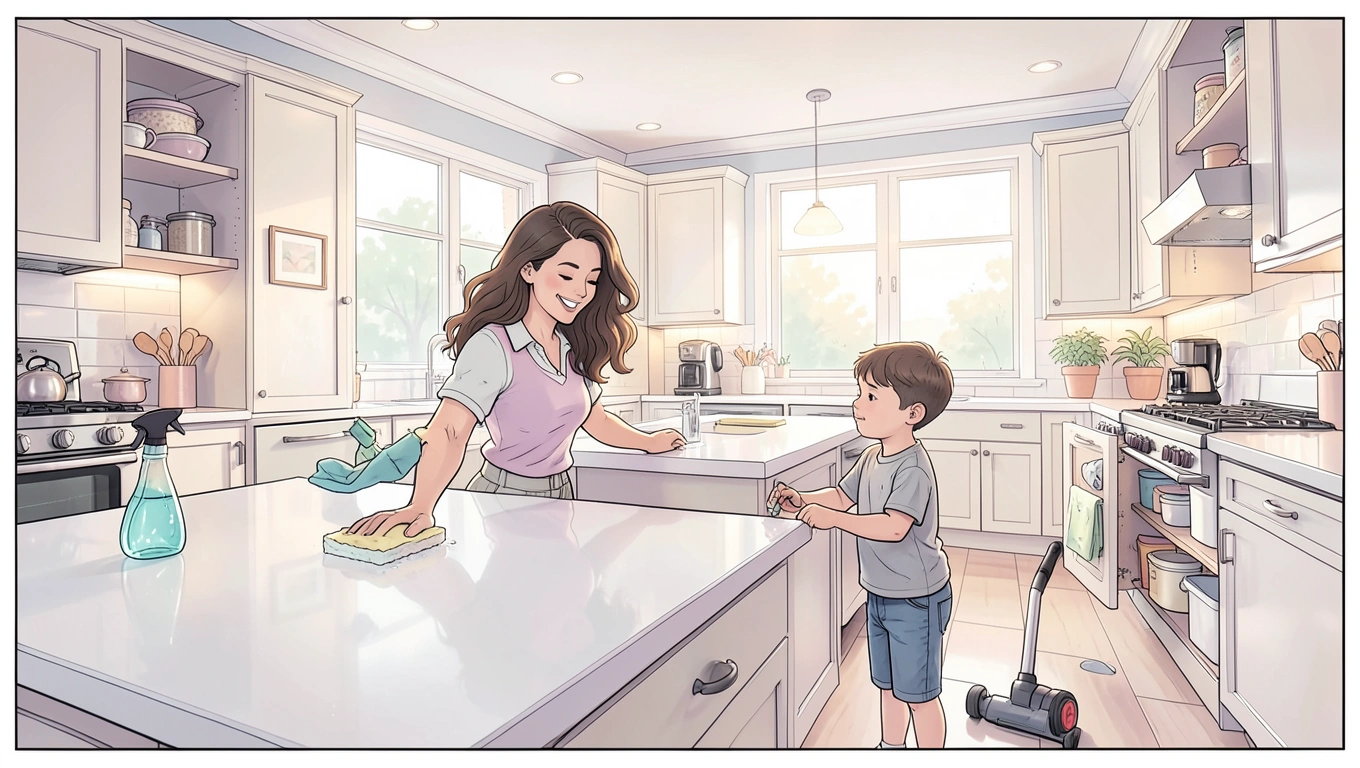
Between school runs, work deadlines, meal prep, and the daily chaos of family life, deep cleaning often falls to the bottom of the priority list. You know those baseboards need attention and the pantry could use a serious sort-out, but when? The thought of sacrificing an entire weekend to scrubbing feels impossible when you're already running on empty. The good news is that deep cleaning doesn't have to mean marathon sessions that leave everyone exhausted and resentful. A realistic approach breaks the work into manageable chunks, gets everyone involved, and focuses on progress over perfection. This weekend plan is designed for real families with real schedules, not for people with unlimited time and energy.
Why Deep Cleaning Matters Beyond the Surface
Regular tidying keeps your home looking presentable, but deep cleaning tackles the stuff you don't see every day. We're talking about dust bunnies behind the refrigerator, grime on light switches, forgotten items shoved to the back of closets, and the mysterious stickiness on kitchen cabinets that appeared months ago. These neglected areas accumulate allergens, bacteria, and clutter that affect your family's health and stress levels.
Research from the National Institute of Environmental Health Sciences shows that indoor air quality significantly impacts respiratory health, and regular deep cleaning reduces allergen buildup. Beyond health benefits, there's a psychological component. Living in a space where hidden messes lurk creates low-level anxiety, even if you're not consciously thinking about that disaster under the couch.

The traditional advice of deep cleaning once yearly doesn't cut it for busy family homes. Most experts now recommend tackling deep cleaning seasonally, every three months, or adopting a one-room-per-month rotation. The frequency matters less than consistency. A quarterly deep clean prevents the overwhelming buildup that makes the task feel insurmountable when you finally face it.
The Saturday Sprint: High-Impact Areas
Saturday is your power day. Focus on the spaces that get the most traffic and collect the most grime: the kitchen and main bathroom. These rooms impact daily life most directly, and cleaning them delivers immediate, visible results that motivate everyone to keep going.
Start with the kitchen. Empty your refrigerator one shelf at a time, wipe down surfaces, check expiration dates, and consolidate items. This takes about 30 minutes and prevents the overwhelming feeling of facing the entire appliance at once. While you're in fridge mode, pull it away from the wall and vacuum the coils. This simple maintenance task, often overlooked for years, improves efficiency and extends the appliance's life.
Move to the oven and stovetop. If you've been avoiding the oven because last month's lasagna bubbled over, now's the time. Use the self-cleaning function if you have it, or apply a paste of baking soda and water to stubborn spots, let it sit for 15 minutes, then scrub. For the stovetop, remove burner grates and knobs, soak them in hot soapy water while you wipe down the surface underneath.
Tackle the main bathroom next. Remove everything from counters and the shower. Spray tile, grout, and glass doors with cleaner and let it sit while you clean the toilet, inside and out, including the often-forgotten base where dust and hair accumulate. Return to the shower, scrub with focus on grout lines where mildew hides, then squeegee or wipe dry. Wash bath mats and shower curtains - yes, they both need regular cleaning.
Set a timer for each task. Working in 15-20 minute bursts makes the work feel manageable and prevents burnout. When the timer goes off, take a five-minute break. Drink water, stretch, check your progress. This rhythm keeps energy levels steady throughout the day.
The Sunday Strategy: Bedrooms and Living Spaces
Sunday's plan targets bedrooms and common living areas. These spaces require less intensive scrubbing than kitchens and bathrooms but need attention to details that regular tidying misses.
Start with bedrooms. Strip all beds and wash bedding, including mattress covers if you have them. While machines run, vacuum mattresses to remove dust mites and dead skin cells, then flip or rotate them. Wipe down headboards, nightstands, and lamp bases. Pull furniture away from walls to vacuum behind and underneath. Dust ceiling fan blades, which collect surprising amounts of debris that recirculates when the fan runs.
Tackle closets next, one per bedroom. You don't need to complete a full seasonal wardrobe swap, but spend 20 minutes per closet removing items no one wears, organizing what remains, and wiping down shelves. Donate or discard immediately rather than creating a "maybe" pile that lingers for months. Children's closets especially benefit from regular purging as they outgrow clothes quickly.
In living areas, move beyond surface dusting to clean baseboards, door frames, and light switches. These high-touch surfaces harbor germs but rarely get attention during quick tidy-ups. Vacuum upholstered furniture using attachments to reach crevices where crumbs and pet hair hide. If you have throw pillows with removable covers, wash them. Wipe down electronics, remotes, and game controllers with appropriate cleaning wipes.
Don't forget windows and window sills. These collect dust, dead bugs, and grime that regular cleaning misses. A quick wipe-down makes a noticeable difference in how much natural light enters your home and improves the overall feeling of cleanliness.
Getting Everyone Involved Without the Drama
The fastest way to resent weekend deep cleaning is trying to do it all yourself. Family homes create family messes, and everyone capable of making a mess is capable of cleaning one. The key is assigning tasks appropriately and making participation non-negotiable but not miserable.
Assign zones rather than vague instructions. A seven-year-old won't successfully "clean the bathroom," but they can wipe baseboards with a damp cloth, spray and wipe mirrors under supervision, or organize items under the sink. Teenagers can handle full rooms with clear checklists. Post the checklist where they're working so they know exactly what "done" looks like. This prevents the "I thought I was finished" argument when you inspect their work.
Younger children respond well to gamification. Set a timer and see who can pick up the most toys before it buzzes. Create a point system where completed tasks earn privileges. Older kids and teens might prefer earning screen time or choosing the weekend movie. Find what motivates your specific children rather than forcing a system that doesn't match your family culture.
Work alongside your family, especially with younger children. They learn by watching and benefit from your company making the task less tedious. Put on music everyone enjoys. The American Psychological Association notes that collaborative household tasks build responsibility and independence in children while strengthening family bonds through shared accomplishment.
Be realistic about standards. Your teenager's version of "clean" won't match yours, and that's okay for most tasks. Save your perfectionism for areas that genuinely matter for health or safety, like kitchen sanitation. Accept good-enough for decorative dusting. The goal is progress and building habits, not magazine-worthy perfection that makes everyone miserable.
Summary
- Deep cleaning addresses neglected areas like baseboards, behind appliances, and inside closets that regular tidying misses, improving both air quality and reducing background stress
- Breaking the work across Saturday (kitchen and bathrooms) and Sunday (bedrooms and living areas) prevents exhaustion and makes the task achievable for busy families
- Working in 15-20 minute timed bursts with short breaks maintains energy levels and makes progress feel manageable rather than overwhelming
- Assigning specific zones or tasks to family members, including children, distributes workload and teaches responsibility while making the job faster
- Quarterly deep cleaning (every three months) or monthly room rotation prevents overwhelming buildup better than yearly marathon sessions
- High-impact areas like refrigerators, ovens, and bathrooms deliver the most noticeable improvements when cleaned thoroughly
- Realistic standards and age-appropriate task assignment prevent resentment while still accomplishing meaningful cleaning goals
Final Thought
The perfect deep-cleaning weekend doesn't exist. Someone will complain, something will take longer than planned, and you'll probably discover a mess you didn't know existed that throws off your schedule. That's normal family life, not failure. What matters is establishing a rhythm where deep cleaning happens regularly in manageable doses rather than becoming a dreaded event you postpone until the house reaches crisis level.
The two-day plan outlined here won't transform your home into a spotless showroom, and that's not the goal. It will address the accumulating grime and clutter that makes daily life feel harder than it needs to be. You'll breathe easier knowing dust and allergens have been removed. You'll find things more easily when closets and cabinets are organized. You'll feel less stressed seeing clean spaces rather than mentally cataloging everything that needs attention.
Most importantly, involving the whole family normalizes cleaning as a shared responsibility rather than one person's burden. Children who participate in home maintenance grow into adults who can care for their own spaces. They learn that homes don't magically stay clean and that everyone benefits when everyone contributes. That lesson matters more than any sparkling faucet or organized linen closet. Start this weekend, adjust the plan to fit your family's needs, and build the habit that makes your home work better for everyone who lives there.
Questions?
How often should a busy family do deep cleaning?
Most experts recommend deep cleaning every three months, seasonally, rather than once yearly. This prevents overwhelming buildup and makes each session more manageable. Alternatively, you can adopt a rotating schedule where you deep clean one room per month, spreading the work throughout the year while ensuring every area gets attention regularly.
What should I clean first when deep cleaning a house?
Start with the kitchen and main bathroom, as these high-traffic areas collect the most grime and bacteria while delivering the most noticeable results. Within each room, begin by decluttering and removing items from surfaces, then clean from top to bottom (ceilings, walls, surfaces, then floors) to avoid re-cleaning areas as dust and debris fall downward.
How can I motivate my family to help with deep cleaning?
Assign specific zones or tasks rather than vague instructions, making expectations clear. Use age-appropriate responsibilities and provide checklists so everyone knows what "done" looks like. Consider incentives like screen time, choosing weekend activities, or earning privileges. Working alongside family members, especially younger children, and playing music everyone enjoys makes the task less tedious and more collaborative.
What's the difference between regular cleaning and deep cleaning?
Regular cleaning maintains day-to-day tidiness through tasks like wiping counters, vacuuming visible floors, and washing dishes. Deep cleaning addresses neglected areas like baseboards, behind appliances, inside cabinets and closets, grout lines, ceiling fans, and under furniture. It removes accumulated dust, allergens, and grime that regular maintenance doesn't reach, typically requiring more time and intensive scrubbing.