Print on demand has been around long enough that you might be wondering if the opportunity has passed. The short answer is no, but the reality is more nuanced. The market is growing - analysts project it could surpass $100 billion by 2034 - but success today requires a smarter approach than it did a few years ago. Simply uploading generic designs and hoping for sales won't cut it anymore. If you're willing to treat this as a real business rather than passive income, print on demand can still generate meaningful side income in 2026.
The Current State of Print on Demand
The print on demand industry has matured significantly. What started as a novelty has become a legitimate business model with serious competition. Platforms like Printful have made it incredibly easy for anyone to start selling custom products without holding inventory.
The barrier to entry remains remarkably low. You don't need thousands of dollars for inventory or warehouse space. You create designs, list them on products, and the print on demand company handles production and shipping when someone buys. This model eliminates the biggest risks traditional product businesses face.
But here's what has changed: the marketplace is crowded. Etsy, Amazon, and independent Shopify stores are filled with print on demand products. Standing out requires more than slapping a funny quote on a t-shirt. The sellers making real money in 2026 are those who understand their niche deeply, create genuinely appealing designs, and know how to reach their target audience.
Profit margins typically range from 40-60% depending on your pricing strategy and product type. Some sellers achieve higher margins with premium products or unique niches, while others work with slimmer margins on higher volume. The math works if you can generate consistent sales, but getting to that point requires strategic effort.
What Makes Print on Demand Profitable Now
Success in print on demand today comes down to specificity. Generic motivational quotes or basic holiday designs rarely break through the noise. You need to identify underserved niches where you can offer something people actually want but struggle to find.
Think about specific hobbies, professions, or communities. A design targeting marathon runners training for their first race will perform better than a generic "runner" design. A shirt for elementary school librarians will resonate more than one that just says "librarian." The more specific you get, the less competition you face and the more your designs matter to your target customer.
Quality matters more than quantity. The days of uploading hundreds of mediocre designs are over. Platforms and marketplaces have gotten better at surfacing quality, and customers have higher expectations. Three excellent designs that truly speak to a specific audience will outperform fifty generic ones.
Marketing is no longer optional. You can't rely solely on marketplace search traffic. Successful print on demand sellers in 2026 use social media, build email lists, collaborate with influencers in their niche, or run targeted ads. The product is only half the equation - getting it in front of the right people is the other half.
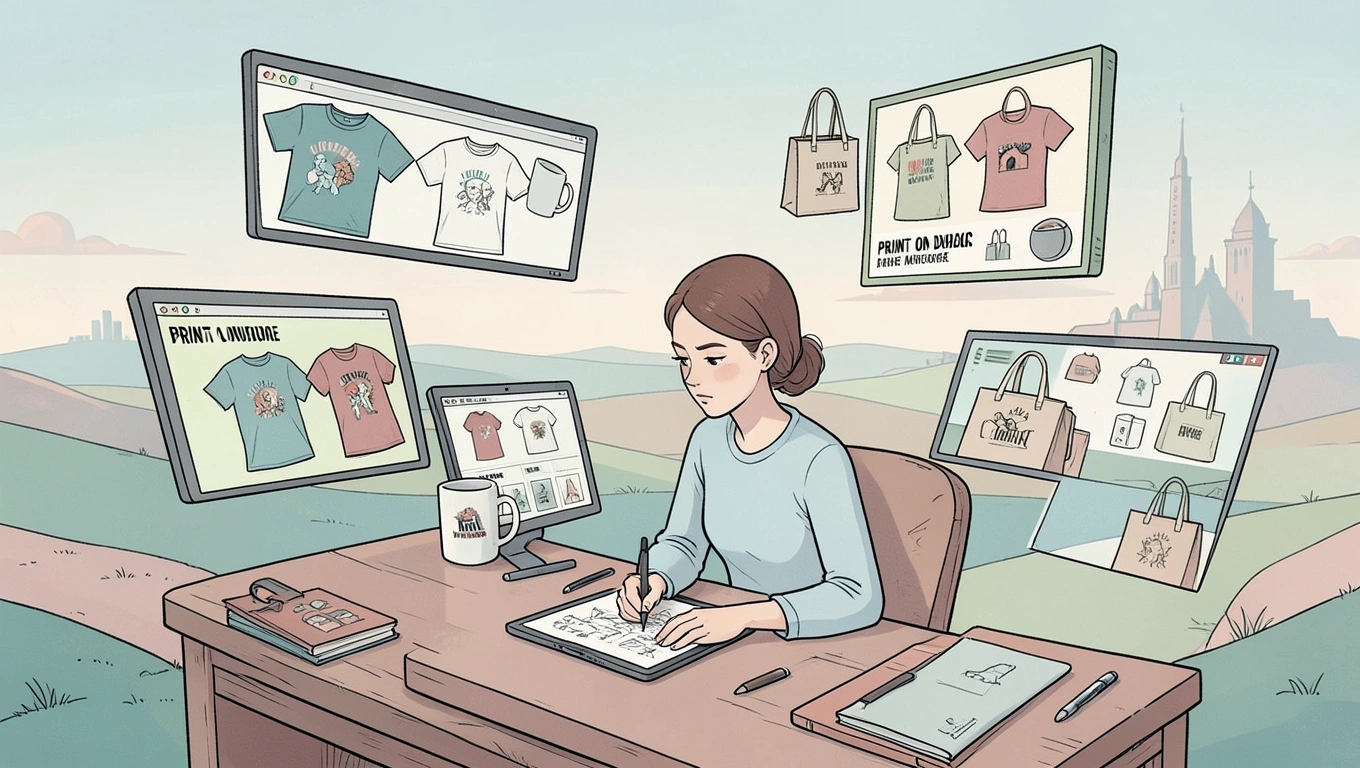
Your choice of products also matters. T-shirts are the most competitive category. Consider branching into mugs, phone cases, tote bags, wall art, or other items where you face less competition. Different products appeal to different niches, and diversifying can stabilize your income.
The Real Challenges You'll Face
Let's be honest about the difficulties. Print on demand is not a get-rich-quick scheme, and anyone selling it as passive income is misleading you. Building a profitable store takes time and consistent effort.
The first challenge is visibility. Whether you're selling on Etsy, Amazon, or your own store, you're competing for attention. Marketplace algorithms favor established sellers with sales history, creating a chicken-and-egg problem for newcomers. You need sales to get visibility, but you need visibility to get sales.
Design skills or budget matter. You either need to create appealing designs yourself or pay someone who can. Free design tools exist, but they have limitations. Professional-looking designs often require software subscriptions or hiring designers. This isn't necessarily expensive, but it's a real cost to consider.
Customer service falls on you. If a customer receives a defective product or has sizing issues, they contact you, not the print provider. You're the face of the business, which means handling complaints, processing returns, and managing expectations. This takes time and emotional energy.
Profit margins can feel tight when you factor in all costs. After the base product cost, platform fees, payment processing, and any advertising spend, your actual profit per sale might be smaller than you initially expected. You need volume to make meaningful income, and building that volume takes patience.
Trends shift quickly. What sells well this month might be saturated next month. You need to stay aware of what's working in your niche and be willing to adapt your designs and marketing approach regularly.
Who Should Try Print on Demand in 2026
Print on demand makes sense for specific types of people. If you have design skills or a creative outlet you want to monetize, it's worth exploring. Artists, graphic designers, and illustrators can turn their work into products without the overhead of traditional manufacturing.
It works well for people with an existing audience. If you run a blog, YouTube channel, or social media following in a specific niche, print on demand lets you create products your audience already wants. The marketing challenge becomes much easier when you have built-in traffic.
It's suitable for entrepreneurs who want to test product ideas without major financial risk. Before you invest in bulk inventory of a physical product, you can validate demand through print on demand. If something sells well, you can always scale up to traditional manufacturing later.
It's also good for people who understand this is a real business requiring real work. If you're willing to research niches, create or commission quality designs, learn basic marketing, and iterate based on results, you can build something worthwhile. According to industry analysis, successful sellers treat this strategically rather than as a side project they ignore for weeks at a time.
Who shouldn't try it? People looking for truly passive income or those unwilling to invest time in learning what works. If you expect to upload designs once and collect checks forever, you'll be disappointed.
Summary
- The print on demand market is growing and projected to exceed $100 billion by 2034, indicating ongoing opportunity.
- Typical profit margins range from 40-60%, but actual earnings depend on your pricing, niche, and sales volume.
- Success requires focusing on specific niches and quality designs rather than uploading generic content in bulk.
- The business model offers low financial risk with minimal upfront costs and no inventory management.
- Marketing is essential - you can't rely on marketplace traffic alone to generate consistent sales.
- Design quality, customer service, and staying current with trends are ongoing responsibilities.
- Print on demand works best for those with design skills, existing audiences, or willingness to treat it as a real business.
Final Thought
Is print on demand still worth trying as a side income? Yes, but with realistic expectations. This isn't 2018 when uploading simple designs could generate easy money. The market has evolved, and so must your approach.
If you enter this space with a strategic mindset, focusing on serving a specific audience with designs they actually want, you can build a profitable side business. The low startup costs mean your downside risk is limited to your time and perhaps a small investment in designs or advertising.
The key is treating this as a skill-building exercise. You'll learn about product development, customer acquisition, visual design, and online marketing. Even if your first store doesn't become wildly profitable, the skills you develop have value in other business contexts.
Start small, test your ideas, and scale what works. Don't quit your day job expecting immediate income, but don't dismiss the opportunity entirely either. For the right person with the right approach, print on demand remains a viable path to side income in 2026. The question is whether you're willing to put in the strategic effort it now requires.
Questions?
How much money do I need to start a print on demand business?
You can technically start with zero upfront costs using free platform listings and free design tools. However, budgeting $100-300 for better design software, a few initial product samples, and perhaps some basic advertising will give you a more professional start. The beauty of this model is you only pay for products after customers buy them.
How long does it take to make your first sale in print on demand?
This varies dramatically based on your niche, marketing efforts, and platform. Some sellers make their first sale within days if they have an existing audience or run effective ads. Others might wait weeks or months relying solely on organic marketplace traffic. Actively promoting your products significantly shortens this timeline compared to just listing and waiting.
Can you really make a full-time income from print on demand?
Yes, some people do, but they're the exception rather than the rule. Most successful full-time print on demand sellers run multiple stores, have mastered paid advertising, or built significant audiences. For most people, it's better approached as a side income source that might grow over time rather than expecting to replace a full-time salary quickly.
What are the best products to sell in print on demand right now?
Rather than focusing on a single "best" product, think about what fits your niche. T-shirts have the most competition but also the largest market. Items like tote bags, mugs, and wall art often have better margins and less competition. Phone cases work well for trend-based designs. The best product is the one your specific target audience actually wants and will pay for.