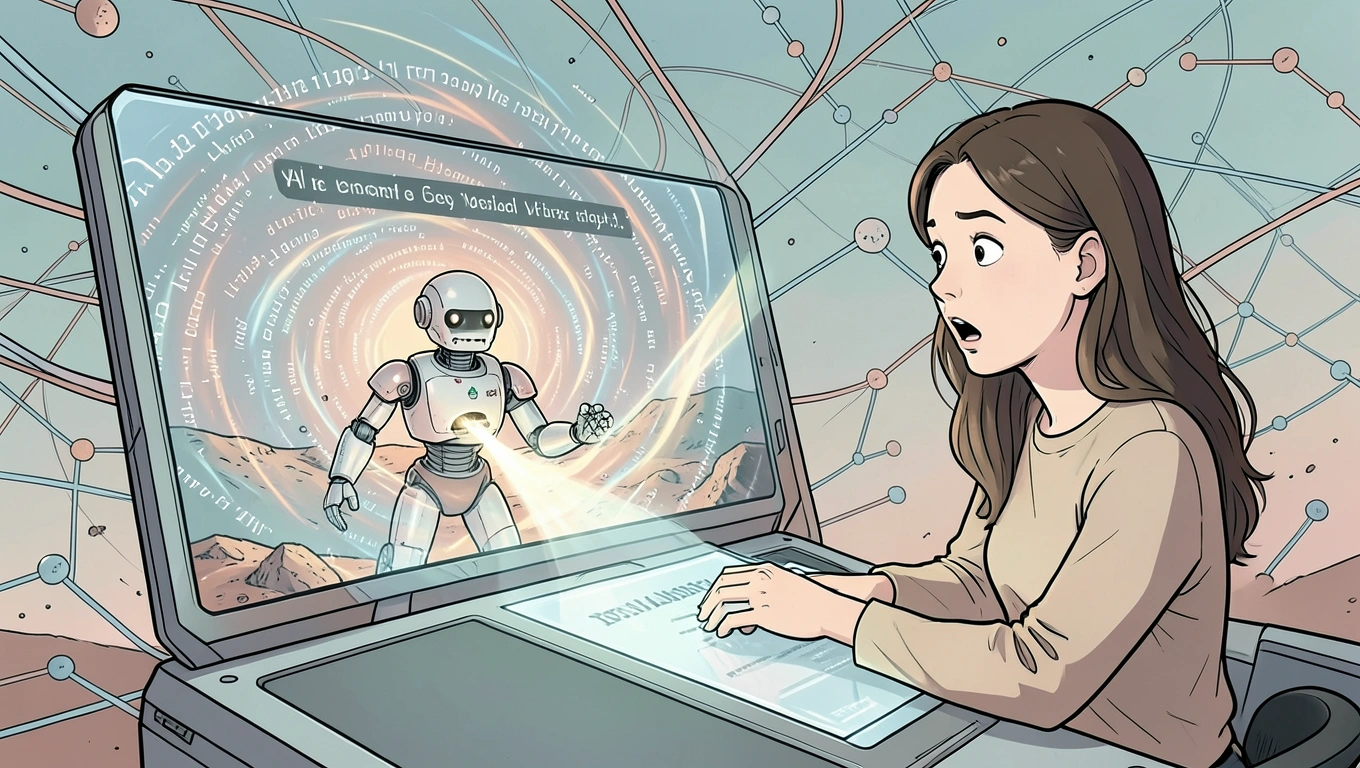
You type a sentence into an app, click a button, and seconds later you're looking at a picture that never existed before. Maybe it's a robot sipping coffee on Mars, or a Victorian-era cat detective in a trench coat. The image feels deliberate, detailed, sometimes eerily accurate to what you described. But how does software transform a string of words into pixels arranged as a coherent scene?
AI picture makers have moved from research labs into everyday creative tools, powering everything from social media posts to concept art. Understanding the mechanics behind this technology helps you write better prompts, set realistic expectations, and appreciate the engineering that makes it all possible. Let's break down the journey from sentence to image.
From Words to Numbers: Text Embeddings
When you submit a text prompt, the AI doesn't read your words the way you do. It can't process language as meaning, only as patterns in data. The first step is converting your sentence into something the model can calculate with: a numerical representation called an embedding.
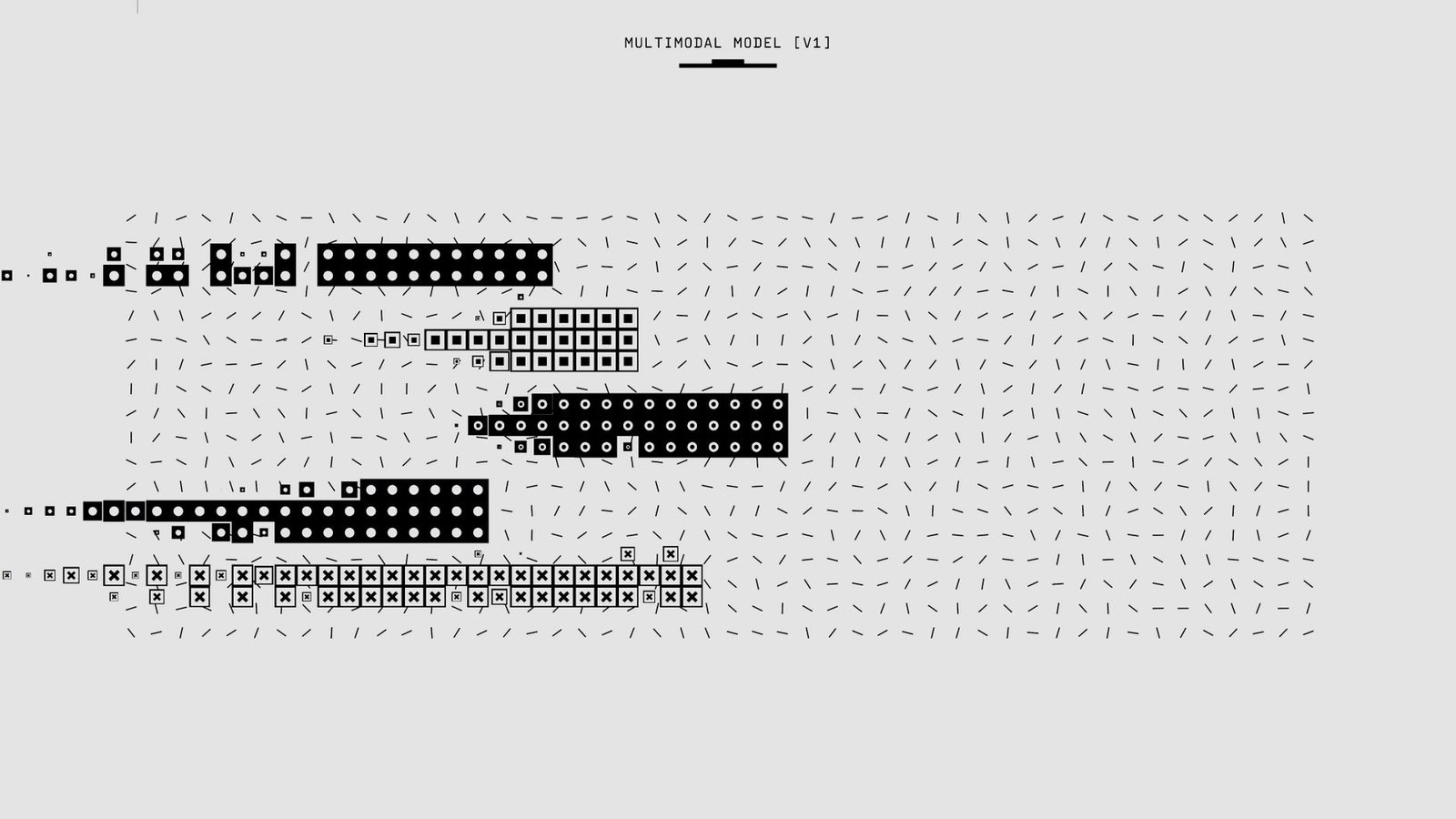
Think of an embedding as a translation layer. Each word or phrase gets mapped to a point in a high-dimensional space, where similar concepts cluster together. "Dog" and "puppy" sit near each other; "spaceship" and "rocket" occupy a different neighbourhood. This dense numerical format captures semantic relationships, so the model understands that "sunset" and "dusk" share visual qualities even if the words differ.
The embedding process relies on models trained to connect language and vision. OpenAI's CLIP is a common example, trained on hundreds of millions of image-text pairs scraped from the internet. CLIP learned which words frequently appear alongside which visual features, building a shared vocabulary between language and imagery. When you write "golden retriever running through a field", the embedding captures not just the words but the visual qualities those words imply: fur texture, motion blur, green and gold colour tones.
This numerical prompt becomes the steering wheel for the entire generation process. It guides every decision the model makes as it constructs the image, ensuring the final result aligns with your description rather than producing random noise.
Diffusion Models: Building Images from Noise
Most current AI picture makers use a technique called diffusion. Imagine watching a video of an ice cube melting, then playing it in reverse. Diffusion works the same way: it starts with pure visual noise - static, like a detuned television - and progressively refines it into a clear image.
The model was trained by taking real images and gradually adding noise to them until they became unrecognisable static. It learned the reverse process: how to remove that noise step by step, recovering the original image. When you submit a prompt, the model applies this learned denoising process, but guided by your text embedding. Each step removes a bit more randomness and brings the image closer to something that matches your description.
This happens in dozens or hundreds of iterations. Early steps establish rough shapes and composition - where the horizon sits, whether the subject is centred or offset. Middle steps refine details: facial features, texture, lighting. Final steps polish fine details like fabric weave or individual strands of hair. At every stage, the text embedding acts as a reference point, nudging the model toward generating pixels that align with your words.
Diffusion models excel because they work gradually. Rather than trying to generate a perfect image in one shot, they make small corrections repeatedly, each one informed by what worked in training. This iterative approach produces more coherent, detailed results than earlier methods that tried to generate images directly.
Latent Space: Working Smarter, Not Harder
Generating a high-resolution image pixel by pixel demands enormous computational power. A single 1024×1024 image contains over a million pixels, each with red, green, and blue values. Running diffusion directly on that scale would require industrial-grade hardware and minutes per image.
Most modern systems solve this with latent diffusion models. Instead of working with raw pixels, they operate in a compressed, abstract representation called latent space. An encoder network first compresses the image into a smaller, denser format - imagine squeezing a high-resolution photo into a compact blueprint that captures the essential structure and meaning without every individual pixel.
The diffusion process happens in this compressed space, which is far more efficient. Once the model finishes refining the latent representation, a decoder network expands it back into a full-resolution image. This two-stage approach maintains visual quality while slashing the computational cost, making it possible to generate images on consumer hardware in seconds rather than hours.
Latent space also enables more creative control. Because the compressed representation captures high-level concepts rather than raw pixels, you can manipulate it more intuitively. Want to shift the mood from cheerful to melancholic? Adjusting values in latent space can do that without redrawing every pixel manually.
Training Data: Where the Model Learns Visual Language
None of this works without training data. AI picture makers learn by studying vast collections of images paired with text descriptions - captions, alt text, tags, anything that connects words to visuals. These datasets often contain hundreds of millions of examples scraped from public websites, stock photo libraries, and social media.
During training, the model sees countless variations: dogs in every breed, colour, and setting; mountains at different times of day; people wearing diverse clothing across cultures and eras. It learns statistical patterns - what "snowy" tends to look like, how "vintage" affects colour grading, where shadows fall when a light source is described as "from the left".
This breadth of training data explains both the strengths and limitations of these systems. If a concept appears frequently in the training set - say, common animals or popular landmarks - the model generates it easily. Obscure subjects, recent trends, or highly specific combinations may confuse it because the model never encountered enough examples to learn the pattern reliably.
Training also bakes in biases present in the source data. If the dataset overrepresents certain demographics or stereotypes, the model will reproduce those patterns unless explicitly corrected. Responsible developers continually refine datasets and add safeguards, but training data remains the foundation that shapes everything the model can do.
Summary
- Text prompts are converted into numerical embeddings that capture semantic meaning and visual associations learned from millions of image-text pairs.
- Diffusion models generate images by starting with random noise and iteratively refining it, guided by your text embedding, over dozens of steps.
- Latent diffusion models work in a compressed representation space rather than directly on pixels, making generation much faster and more efficient.
- Models like CLIP connect language to vision by learning which words correspond to which visual features across massive internet-scale datasets.
- Training data quality and diversity directly shape what the model can generate accurately, including inherited biases and knowledge gaps.
- Each refinement step during diffusion removes noise while aligning the emerging image more closely with the prompt's semantic content.
- The encoder-decoder architecture in latent models compresses images into abstract blueprints, processes them efficiently, then expands them back to full resolution.
Final Thought
The leap from text to image involves layers of translation - language into numbers, numbers into compressed blueprints, blueprints into pixels. What feels like magic is actually a carefully orchestrated chain of learned patterns, each step informed by millions of examples the model studied during training. The technology isn't sentient or creative in a human sense; it's pattern-matching at scale, guided by statistical likelihoods rather than imagination.
Yet the results can surprise even the engineers who build these systems. The model finds visual solutions that weren't explicitly programmed, combining elements in ways that feel novel because they emerge from the complex interplay of data, embeddings, and iterative refinement. As these tools become more accessible, understanding the mechanics helps you use them more effectively. Better prompts yield better images not through luck, but because you're speaking the model's language - giving it the semantic clues it needs to navigate its learned patterns and produce something that matches your vision.
We're still early. Today's picture makers struggle with text in images, anatomical accuracy, and highly specific requests. But the core architecture - embeddings, diffusion, latent space - will likely underpin the next generation of tools. Knowing how sentences become images today prepares you for whatever comes next.
Questions?
Can AI picture makers create images of real people?
Technically yes, but most commercial tools restrict this to prevent misuse. Models trained on public datasets learned what human faces look like, so they can generate realistic portraits. However, creating images of specific individuals without consent raises ethical and legal concerns, so platforms typically block attempts to generate recognisable public figures or use uploaded photos of real people as references.
Why do AI-generated images sometimes look weird or distorted?
Distortions happen when your prompt describes something underrepresented in the training data, or when conflicting concepts confuse the model. Hands are notoriously difficult because they appear in countless poses and angles, making it hard for the model to learn a consistent pattern. Vague prompts also cause issues - without specific guidance, the model averages across many possibilities, producing muddy or inconsistent results.
How long does it take to generate an image from text?
On modern consumer hardware or cloud services, generating a single image typically takes 5 to 30 seconds depending on resolution, model complexity, and the number of diffusion steps. Higher quality settings require more iterations, which increases processing time. Commercial platforms often use optimised infrastructure to deliver results in under 10 seconds for standard requests.
Do I need technical skills to use AI picture makers?
No. Most tools offer simple text boxes where you type a description and click generate. However, learning prompt engineering - how to phrase requests clearly, specify styles, and control composition - produces better results. This isn't coding or programming; it's more like learning the vocabulary and structure that helps the model understand your intent. Practice improves outcomes, but anyone can start experimenting immediately.