
You know that feeling when you wake up and your body feels like it's held together with rusty hinges? Every muscle tight, every joint creaky, and you wonder if you slept in a pretzel shape. We've all been there. The solution sounds simple: stretch in the morning. But here's where most of us stumble. We start strong for a day or two, then life happens and the habit evaporates. The real challenge isn't knowing that stretching is good for you. It's figuring out how to make it stick when you're groggy, rushed, or just not feeling it. Let's talk about how to build a morning stretching routine that actually becomes part of your day, not just another abandoned resolution.
Start Ridiculously Small
The biggest mistake people make with morning stretching is starting too ambitious. You picture yourself in a thirty-minute yoga flow, feeling zen and flexible. Reality check: when your alarm goes off and you're barely awake, that thirty-minute commitment feels impossible.
Starting with a short duration, such as five to ten minutes, can help establish a consistent morning stretching routine. Actually, go even smaller at first. Three minutes. Even two. The goal in week one isn't to transform your flexibility. It's to prove to yourself that you can show up.
Think about it like this: your brain resists big changes. It sees a major time commitment and throws up every excuse in the book. But two minutes? That's nothing. You spend longer scrolling through your phone before getting out of bed. This tiny commitment bypasses your resistance entirely.
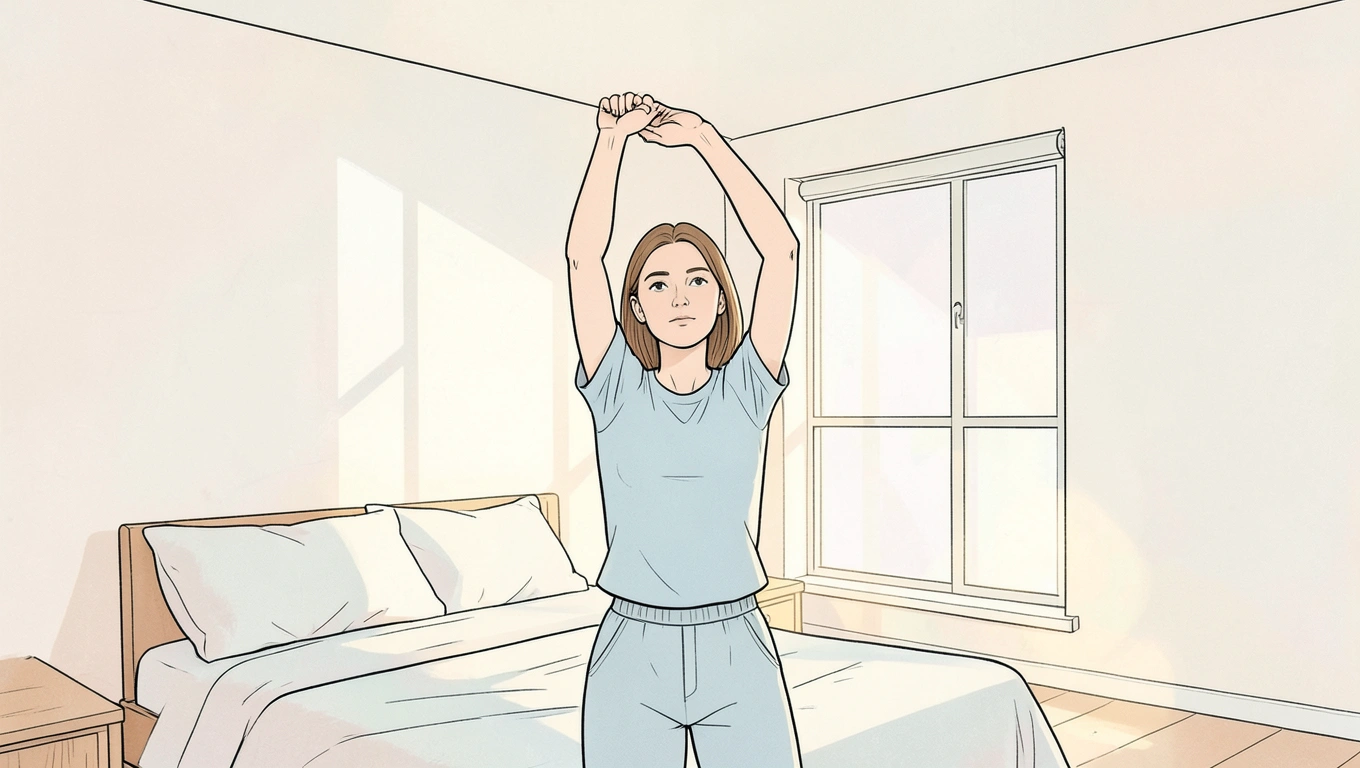
Here's what a genuinely small start looks like. Set your alarm two minutes earlier than usual. When it goes off, sit up in bed and do three simple stretches: reach your arms overhead, roll your shoulders back a few times, and gently twist your spine to each side. That's it. You're done. You've stretched.
Do this for one week straight without adding anything else. The repetition matters more than the duration. You're building a trigger in your brain: alarm goes off, body stretches. Once that connection feels automatic, then you can add a minute or two more. But not before.
Make It Easier Than Brushing Your Teeth
Your morning stretching routine needs to be so simple that you can do it half-asleep. Literally. Because some mornings, that's exactly how you'll feel.
It can be helpful to get out of bed and drink a glass of water before beginning your morning stretches. This serves two purposes. First, your body is dehydrated after sleeping for hours, and even a few minutes of gentle movement each morning can increase blood flow better when you're hydrated. Second, it creates a simple sequence: feet hit floor, walk to kitchen, drink water, stretch.
The sequence part is crucial. You're not trying to remember to stretch at some random point in your morning. You're linking it to something you already do automatically. The water acts as a bridge between waking up and stretching. Your body gets a mini wake-up call, your muscles get some hydration, and you're ready to move.
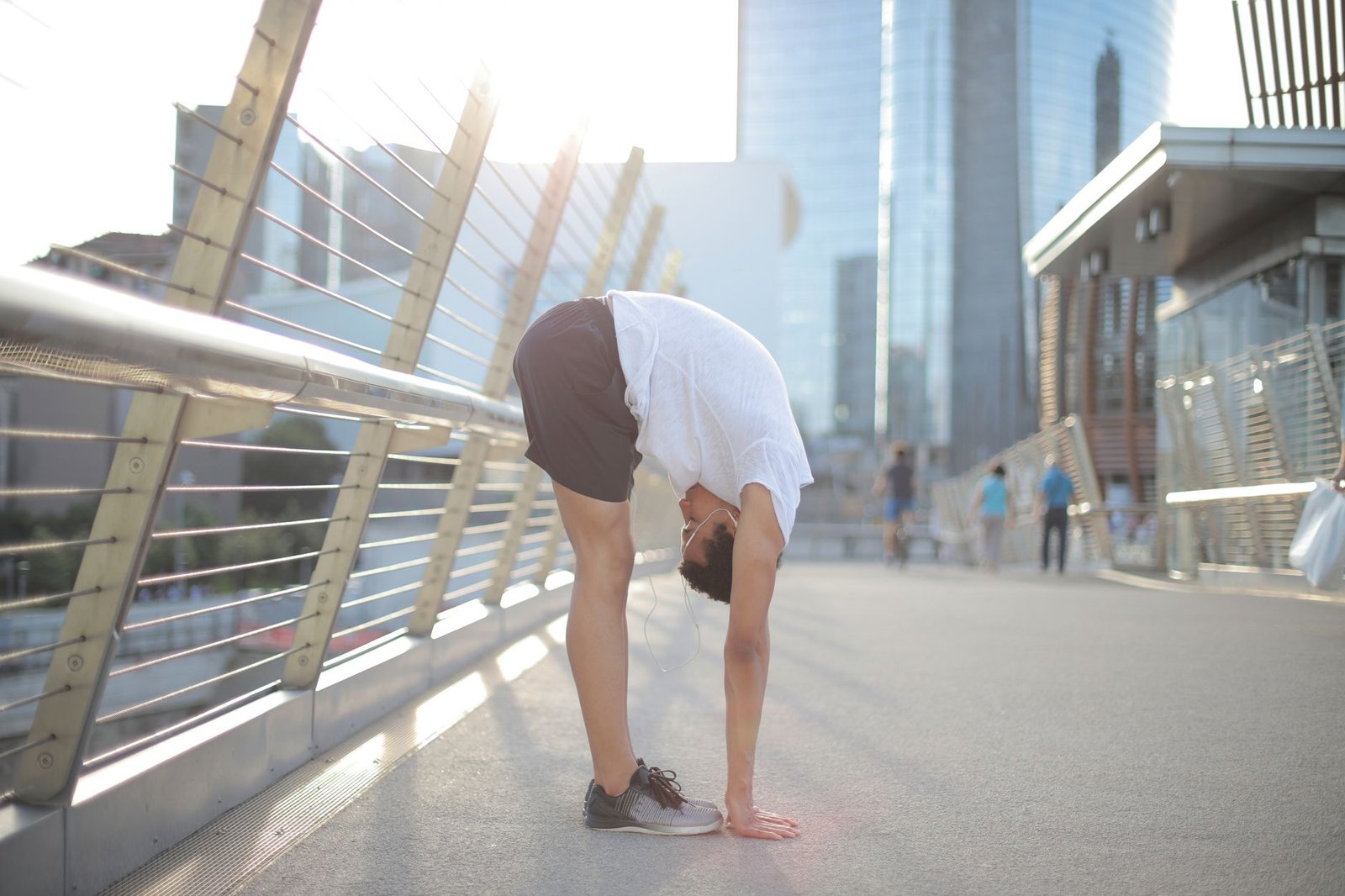
Keep the actual stretches dead simple. Forget complicated yoga poses that require looking at your phone to remember. Stick with stretches your body knows: neck rolls, shoulder shrugs, side bends, gentle twists, reaching for your toes (or knees, or shins, wherever you can comfortably reach). You should be able to do your entire routine without thinking about what comes next.
Also, pick one spot in your home. The same spot every single day. Maybe it's a clear space next to your bed, or in front of your kitchen counter, or on a yoga mat you leave permanently unrolled in your bedroom. When everything else is variable in the morning, having one consistent location helps your brain automate the habit.
Connect It to Something You Actually Want
Let's be honest: most mornings, the immediate reward for stretching is pretty subtle. Morning stretching can improve flexibility, reduce stiffness, enhance balance, and promote better posture throughout the day. But on Tuesday morning when you're tired and running late, those benefits feel abstract and far away.
You need an immediate payoff. Something you notice right then, in the moment, that makes you think "yeah, that felt good."
This is where breathing comes in. Incorporating deep breathing with stretches can help calm the mind, reduce stress, and improve focus. But more importantly for habit formation, it feels noticeably different. When you pair a simple neck stretch with a slow, deep breath in and out, you actually feel your nervous system downshift. It's tangible. Immediate.
Try this: next time you stretch, make each movement match your breath. Breathe in as you raise your arms overhead. Breathe out as you fold forward. Breathe in as you twist to the right. Breathe out as you return to center. You're not just moving your body. You're creating a mini meditation, a pocket of calm before your day explodes into emails and responsibilities.
That calm is your immediate reward. Not flexibility six months from now. The feeling of being centered and less frantic, right now, today. When your habit delivers something you want in the moment, you'll actually want to do it again tomorrow.
Some people pair stretching with their morning coffee brewing. The ritual becomes: start the coffee, stretch while it brews, reward yourself with that first sip. Others play one favorite song and stretch for exactly that long. The music is enjoyable, and when the song ends, you're done. You're borrowing satisfaction from something you already like and attaching it to your new habit.
Plan for When You Don't Feel Like It
You will have mornings when you absolutely do not want to stretch. You'll be running late. You'll have slept terribly. You'll just want to skip it and promise yourself you'll do it tomorrow.
This is where most stretching habits die. Not because people don't know the benefits. But because they don't have a plan for the resistance.
Here's your plan: on those mornings, do one stretch. Just one. The easiest one you know. Stand up, reach your arms overhead, take a deep breath, and you're done. You showed up. The habit survived.
This sounds too easy to matter, but it's actually the most important rule. Consistency beats intensity every single time when you're building a habit. Doing one pathetic stretch on a terrible morning keeps your streak alive. Skipping entirely because you can't do your "full" routine breaks the chain and makes it exponentially harder to start again.
Also, stop trying to be perfect. You don't need to stretch for exactly five minutes at exactly 6:30am every single day. Some days it'll be three minutes at 6:45. Other days it'll be seven minutes at 6:15. That variation is fine. What matters is that stretching happens most mornings, not that it happens identically every time.
Track your habit if that helps you, but keep it simple. Put a check mark on a calendar. Send yourself a quick text that just says "stretched." The tracking isn't about guilt or judgment. It's about seeing evidence that you're actually doing this thing you said you'd do. That visual proof builds confidence, and confidence makes tomorrow's stretch easier to start.
Summary
- Begin with just five to ten minutes, or even less - two or three minutes works when you're establishing the pattern
- Drink water first thing to hydrate your body and create a simple routine: wake up, drink water, stretch
- Even brief morning movement increases blood flow, warms muscles, and reduces overnight stiffness
- Pair stretching with deep breathing to calm your mind, reduce stress, and create an immediate reward you'll actually feel
- Stick to simple stretches you can do half-asleep in the same spot every morning for automatic consistency
- On difficult mornings, do just one stretch to keep your streak alive rather than skipping entirely
- Regular morning stretching improves flexibility, balance, and posture throughout the day when you maintain the habit
Final Thought
The thing about morning stretching is that it's less about your hamstrings and more about proving something to yourself. Every morning you show up, even for two minutes, you're demonstrating that you can make a commitment and follow through. That might sound dramatic for something as simple as touching your toes before breakfast, but think about how rare that actually is. How many things have you said you'd start doing and then quietly abandoned?
This doesn't have to be one of them. You don't need to become a yoga expert or achieve perfect splits. You just need to move your body a little bit, most mornings, and notice how different that feels from not moving at all. The flexibility will come. The reduced stiffness will come. But the real win is the first week when you realize you've actually stuck with something. Start smaller than feels significant. Make it easier than seems worthwhile. And watch what happens when you remove every excuse your brain usually deploys. You might be surprised by how quickly this becomes the part of your morning you actually look forward to.
Questions?
What time of day is best for stretching?
Morning stretching works well because your body naturally needs movement after being still all night, but the best time is whenever you'll actually do it consistently. Some people prefer evening stretching to unwind. Pick the time that fits your schedule and energy levels. If mornings are chaotic, a lunch break or pre-bed routine might stick better. Consistency matters more than the specific hour.
Should I stretch before or after breakfast?
Stretch before breakfast or at least before a heavy meal. Your body moves more easily when your stomach isn't full. Drinking water before stretching is helpful, but save the big breakfast for afterward. If you need something, a small piece of fruit or a few sips of coffee are fine. Just avoid doing deep twists or forward folds right after eating a full meal.
How long until I notice flexibility improvements?
Most people notice reduced morning stiffness within the first week of consistent stretching. Actual flexibility gains, where you can reach noticeably further or move more easily, typically show up after three to four weeks of regular practice. The changes are gradual, so take a photo or note how far you can reach on day one, then check again after a month. You'll be surprised by the difference.
Do I need any equipment to start?
No equipment necessary. Your body and gravity are enough for effective morning stretches. If you want cushioning under your knees or back, a yoga mat helps, but a carpet or folded towel works fine. Some people like a strap or belt to help with certain leg stretches, but you can start with absolutely nothing and add tools later only if you find specific stretches where they'd help.