
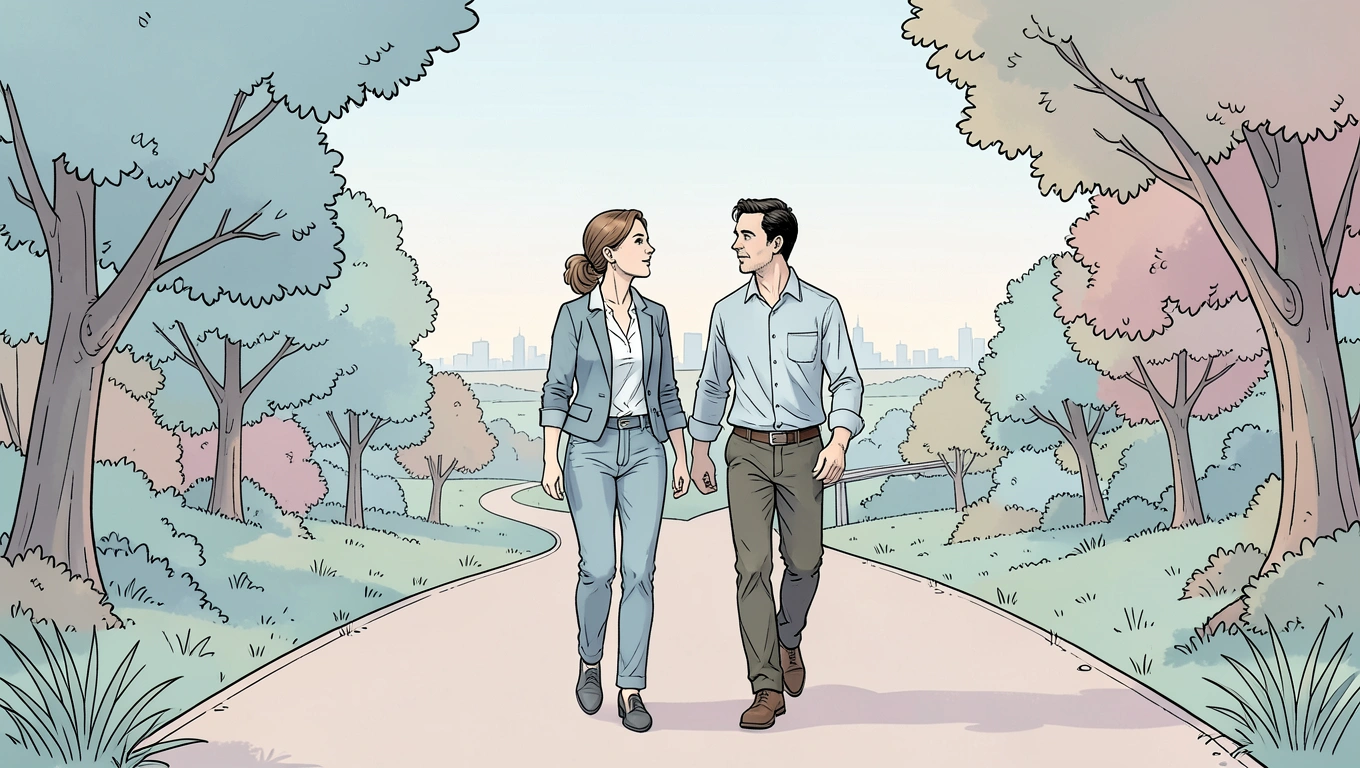
Conference rooms and video calls have dominated the workplace for years, but something is shifting. More professionals are discovering that some of their best conversations happen not across a table, but side by side on a footpath. Walking meetings are taking off in offices, startups, and remote teams worldwide, and the reasons go far beyond just getting steps in. They're changing how we collaborate, think, and connect with colleagues. If you've been stuck in back-to-back seated meetings that drain your energy rather than spark ideas, it might be time to take your next discussion outside.
The Science Behind Why Walking Works
There's real research backing up what many people instinctively feel: walking makes you think better. A Stanford University study found that walking can double the number of creative responses to a prompt compared to sitting. That's not a marginal improvement - that's a fundamental shift in how your brain operates when you're in motion.
When you walk, blood flow increases throughout your body, including to your brain. This enhanced circulation delivers more oxygen and nutrients to the regions responsible for creative thinking and problem-solving. Your body releases endorphins that improve mood and reduce stress, creating an environment where ideas flow more naturally. The rhythmic movement of walking also seems to free up mental bandwidth that sitting at a desk often constrains.

Beyond creativity, the physical act of walking side by side changes the social dynamics of a conversation. You're not staring directly at someone across a table, which can feel confrontational or formal. Instead, you're moving together toward a shared destination, which naturally encourages collaboration rather than competition. Eye contact becomes more natural and less intense. Silences feel comfortable rather than awkward. These subtle shifts create space for more honest, productive dialogue.
What Makes Walking Meetings Different From Traditional Meetings
The casual nature of a walking meeting strips away many of the barriers that make traditional meetings feel stiff or unproductive. There's no hierarchy of seating positions, no one dominating a whiteboard, and no one checking their laptop while pretending to listen. Everyone is on equal footing, literally.
This informality often leads to stronger relationships and better camaraderie among colleagues. When you're walking together through a park or around the block, conversations naturally drift into more personal territory. You might talk about weekend plans, share a frustration about a project, or discover a common interest. These small connections build trust and understanding that carry over into your working relationship.
Walking meetings also force you to be more focused and intentional with your time. You can't pull up a dozen tabs or share a sprawling presentation. The agenda needs to be clear, the discussion needs to stay on track, and decisions need to be made efficiently. This constraint often leads to better outcomes than meetings that meander through slide after slide without reaching any real conclusions.
The physical movement also helps when discussions get tense or stuck. If negotiations hit a rough patch or you're working through a difficult problem, the act of walking provides a natural rhythm that can ease tension. Taking a few extra steps gives everyone time to think before responding. The changing scenery offers mental breaks that help people reset and approach problems from fresh angles.
How to Actually Run a Walking Meeting That Works
Walking meetings aren't just regular meetings that happen to be outside. They require some planning and structure to be effective. The first rule is to keep the group small. Two to four people is the sweet spot. Once you get beyond that, the group fragments into separate conversations, people walk at different paces, and coordination becomes difficult.
Before you head out, set a clear agenda and share it with everyone involved. What specific topics do you need to cover? What decisions need to be made? What outcome are you hoping for by the end? Walking meetings work best for brainstorming, one-on-one discussions, project updates, and informal problem-solving. They're not ideal for presentations that require visual aids, large group decisions, or situations where detailed note-taking is critical.
Choose your route thoughtfully. You want a path that's safe, accessible for everyone involved, and not so noisy that you're shouting over traffic. Parks, quiet neighborhoods, and pedestrian paths work well. The route should be familiar enough that you're not constantly worrying about directions, but interesting enough to provide a pleasant backdrop. Plan for about 20 to 45 minutes - long enough to have a meaningful conversation, but not so long that energy flags or schedules get disrupted.
Weather matters, so have a backup plan. If it's raining or uncomfortably hot, can you walk inside a building or postpone? Make sure everyone knows to dress appropriately for walking, including comfortable shoes. Nothing derails a walking meeting faster than someone in dress shoes that cause blisters after the first ten minutes.
Take notes, but do it smart. Most people find it difficult to walk and write simultaneously, so consider using voice memos on your phone to capture key points and action items. Alternatively, one person can stay back briefly to jot down essential notes, or you can all spend the last few minutes of the walk summarizing what you've decided and who's responsible for what.
Making Walking Meetings Part of Your Culture
If you're sold on the idea and want to see walking meetings become a regular thing at your workplace, start small and lead by example. You don't need company-wide buy-in right away. Suggest a walking meeting for your next one-on-one with a colleague or your manager. If it goes well, share what worked and invite others to try it.
Some organizations are taking this further by establishing formal walking meeting programs. These initiatives might include mapping out suggested routes near the office, setting guidelines for which types of meetings work well on foot, and encouraging managers to model the behavior. When leadership visibly participates in walking meetings, it signals that this isn't just a quirky experiment but a legitimate way to conduct business.
Be mindful of accessibility and inclusion. Not everyone can walk comfortably for extended periods due to physical limitations, health conditions, or disabilities. Walking meetings should be an option, not a requirement. Offer alternatives and never make someone feel excluded because they can't participate in a particular format. The goal is to improve how your team works together, not create new barriers.
For remote or hybrid teams, the concept still applies. Encourage team members to take calls while walking in their own neighborhoods. Video isn't always necessary, and a voice call while moving can provide many of the same benefits. Some distributed teams schedule "walk and talk" sessions where everyone goes for a walk at the same time, connected by audio, sharing what they're seeing and experiencing while discussing work topics.
Summary
- Walking meetings can double creative output compared to sitting, according to Stanford research.
- The side-by-side format creates more collaborative, less confrontational conversations than traditional meetings.
- Keep walking meetings small - two to four people works best for maintaining focus and cohesion.
- Plan a clear agenda and choose safe, quiet routes that allow for comfortable conversation.
- Use voice memos or quick post-walk summaries to capture action items without disrupting the flow.
- Walking meetings build stronger relationships through informal conversation and shared physical activity.
- Consider accessibility and offer alternatives so everyone can participate meaningfully in team discussions.
Final Thought
The growing popularity of walking meetings reflects a broader recognition that where and how we work matters as much as what we work on. We're learning that productivity isn't about squeezing more hours into conference rooms or staring at screens until our eyes blur. Sometimes the best work happens when we step away from our desks, move our bodies, and let our minds follow.
This isn't about romanticizing walking or pretending that every meeting should happen outdoors. Some conversations genuinely need whiteboards, presentations, and the structure of a formal setting. But many don't. Many of our meetings would benefit from fresh air, physical movement, and the kind of relaxed focus that walking naturally creates.
As we navigate what work looks like in 2026 and beyond, experimenting with different formats and environments isn't just nice to have - it's essential. Walking meetings won't solve every problem or fit every situation, but they offer a simple, accessible way to think differently about collaboration. The next time you're about to schedule another video call or book another conference room, consider whether the conversation might benefit from a walk instead. Your body, your brain, and possibly your breakthrough idea might thank you.
Questions?
What types of meetings work best as walking meetings?
Walking meetings excel at brainstorming sessions, one-on-one check-ins, project updates, casual problem-solving, and relationship-building conversations. They work less well for meetings requiring presentations, detailed data review, large groups, or extensive note-taking. If the discussion needs visual aids or involves more than four people, a traditional format usually makes more sense.
How long should a walking meeting last?
Most effective walking meetings last between 20 and 45 minutes. This timeframe is long enough to cover meaningful ground without becoming physically tiring or disrupting other commitments. Shorter walks might feel rushed, while longer ones can lead to diminishing returns as energy and focus naturally decline.
How do I take notes during a walking meeting?
Use your phone to record voice memos capturing key decisions and action items as you walk. Alternatively, dedicate the last five minutes of the walk to stopping and summarizing what you've agreed on. Some people prefer to reconstruct notes immediately after returning to their desk while the conversation is still fresh. Avoid trying to write while walking, as it's both difficult and potentially unsafe.
What if someone can't participate in walking meetings for health or accessibility reasons?
Always offer alternatives and never make walking meetings mandatory. Some colleagues may have mobility limitations, chronic pain, or other conditions that make extended walking uncomfortable or impossible. Respect these needs without requiring explanation. The point is to improve collaboration for everyone, which means being flexible about format and ensuring no one feels excluded from important conversations.